
Signs, Tokens & Covenants — Shared Freedom
Order: Shared Freedom — Civic / secular philosophical tradition. Canon: human rights, constitutional thought, civic philosophy, common life.
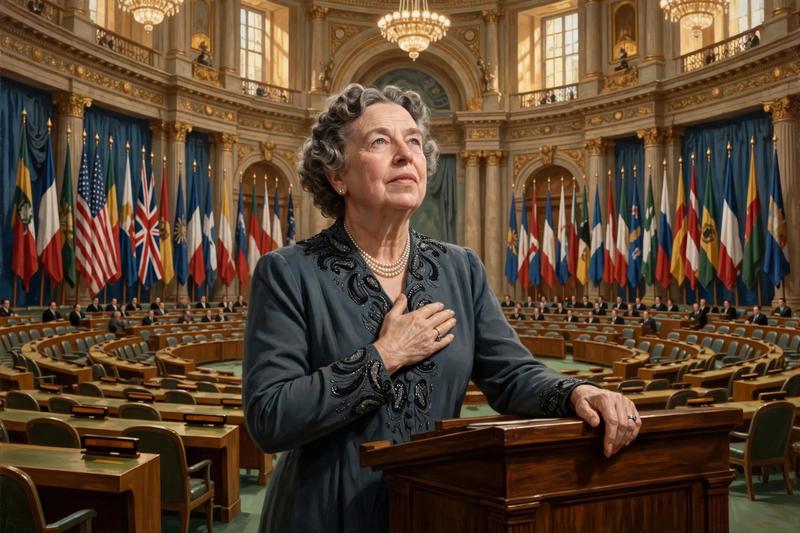
1. Eleanor Roosevelt
- Name of the Covenant: The Covenant of Universal Dignity
- Description with Source Text: As chair of the United Nations Human Rights Commission’s drafting committee, Eleanor Roosevelt shepherded the Universal Declaration of Human Rights to its adoption by the UN General Assembly on December 10, 1948, with 48 votes for, none against, and 8 abstentions. She called it, in her public advocacy, an “international Magna Carta for all men everywhere.” The Declaration’s preamble opens with the conviction that recognition of the inherent dignity and of the equal and inalienable rights of all members of the human family is the foundation of freedom, justice and peace in the world.
- One Guiding Principle: Every human being carries inherent dignity and equal, inalienable rights, and the conscience of a free society must be measured by how it treats the least protected among its members.
- Sign Hand Movement: Right hand placed flat over the heart, held steady for a breath — symbolizing the dignity that resides in every person.
- Token Arm Movement and Body Movement: Both arms raised slowly, palms open and facing outward, then lowered to rest at the sides — embodying rights that extend to all people everywhere.
- Metaphysical Epiphany: Understanding that human dignity is not granted by any state or institution, but recognized as already present in every member of the human family.
- The Proclamation: “I commit to defend the dignity and equal rights of every person, and to judge my community by how it treats its most vulnerable.”
- Two or Three Witnesses: Martin Luther King Jr., Mary Wollstonecraft, and Václav Havel, whose lives each carried the Declaration’s conviction that freedom belongs to all.
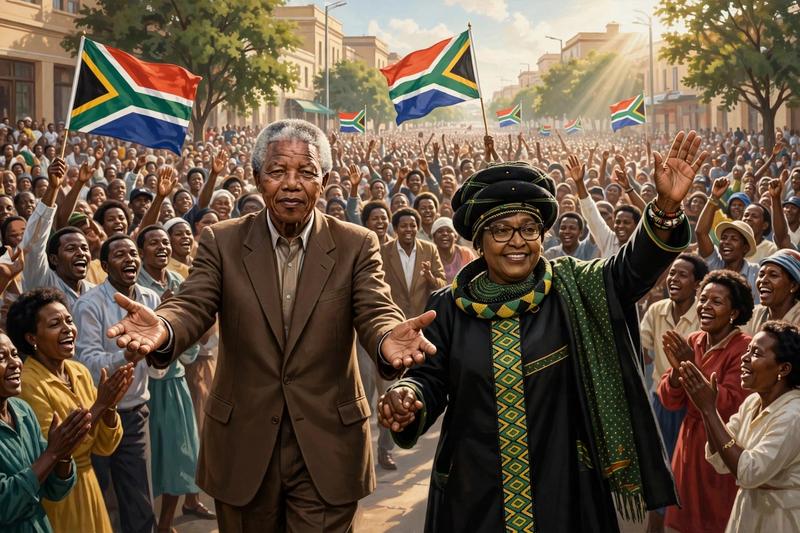
2. Nelson Mandela
- Name of the Covenant: The Covenant of Reconciliation
- Description with Source Text: Nelson Mandela spent 27 years in prison for opposing apartheid, including 18 years on Robben Island, after being sentenced to life in the Rivonia Trial of 1964. On April 20, 1964, facing the possible death penalty, he spoke from the dock for over four hours, closing with the words: “I have cherished the ideal of a democratic and free society in which all persons live together in harmony and with equal opportunities. It is an ideal which I hope to live for and to achieve. But if needs be, it is an ideal for which I am prepared to die.” Released on February 11, 1990, he led South Africa to its first democratic election in 1994 and became its first Black president, choosing reconciliation over vengeance — including the creation of the Truth and Reconciliation Commission.
- One Guiding Principle: Justice without reconciliation is unfinished; the measure of a free people is their refusal to let past suffering become future vengeance.
- Sign Hand Movement: Both fists unclenching slowly into open palms — symbolizing the release of grievance into shared life.
- Token Arm Movement and Body Movement: Stepping forward while extending both hands forward, palms up, at chest height — embodying the offer of a shared future.
- Metaphysical Epiphany: Realizing that freedom is incomplete until it includes the freedom of one’s former oppressor, and that a society heals only when justice and mercy walk together.
- The Proclamation: “I commit to pursue justice without vengeance, and to build the shared future I wish to live in.”
- Two or Three Witnesses: Martin Luther King Jr., Rosa Parks, and John Lewis, whose own struggles against racial oppression likewise ended in the demand for a reconciled, not a revengeful, nation.
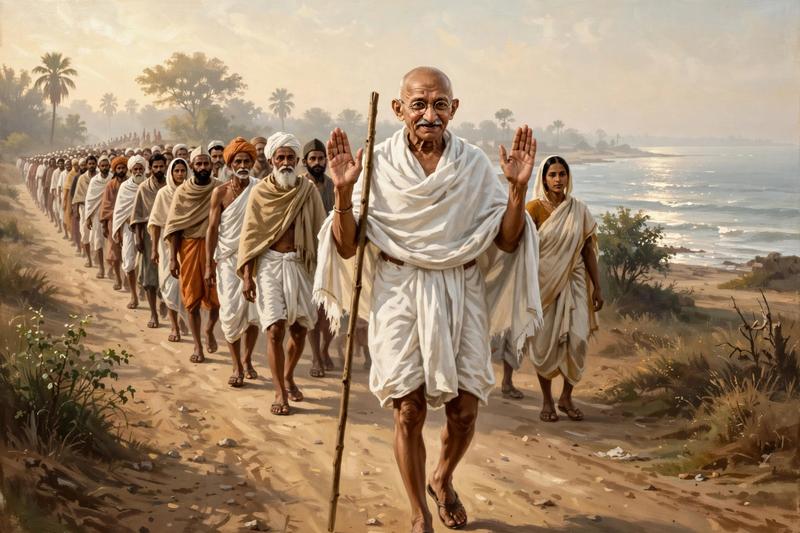
3. Mahatma Gandhi
- Name of the Covenant: The Covenant of Nonviolent Truth
- Description with Source Text: Mohandas K. Gandhi developed satyagraha — “truth-force” or nonviolent resistance — during two decades as a lawyer in South Africa (1893–1915), and brought it to India as the moral engine of the independence movement. The Salt March of March–April 1930, when he led followers 240 miles to the sea at Dandi to defy the British salt tax, turned civil disobedience into a global language of resistance. He insisted that means and ends are inseparable: an unjust cause cannot be won justly.
- One Guiding Principle: Truth is the strongest force available to the oppressed; power seized through violence corrupts the freedom it claims to win, so resistance must be disciplined, nonviolent, and rooted in truth.
- Sign Hand Movement: Index finger and thumb pressed together in a firm circle, the other three fingers extended — symbolizing truth held firmly, without violence.
- Token Arm Movement and Body Movement: Standing rooted in place, both hands slowly rising from the sides to chest height, palms open and forward, in a calm, unyielding posture — embodying nonviolent resistance that neither retreats nor strikes.
- Metaphysical Epiphany: Understanding that the means used to reach a goal shape the goal itself, and that refusing to answer violence with violence is not weakness but the highest strength.
- The Proclamation: “I commit to resist injustice without violence, and to let the truth of my actions be my strength.”
- Two or Three Witnesses: Martin Luther King Jr., Nelson Mandela, and Henry David Thoreau, whose Civil Disobedience (1849) gave philosophical language to the conscience that refuses unjust law.
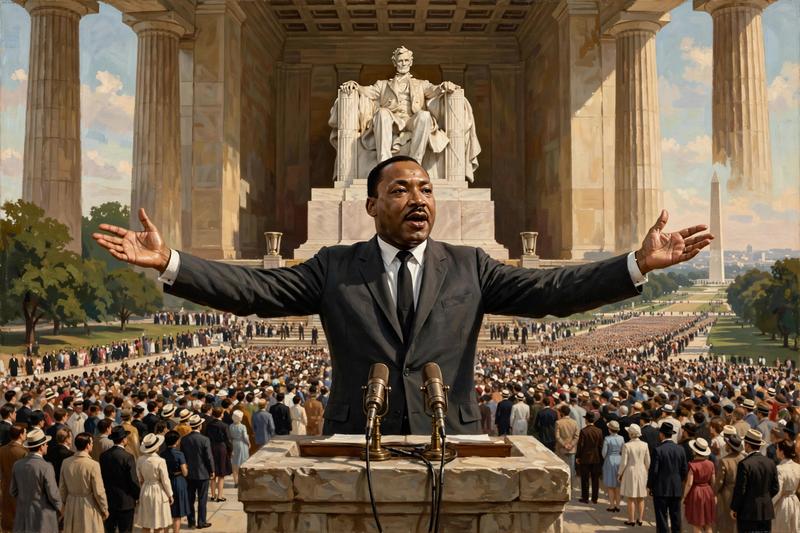
4. Martin Luther King Jr.
- Name of the Covenant: The Covenant of Justice Everywhere
- Description with Source Text: Martin Luther King Jr. led the American civil rights movement from the Montgomery bus boycott of 1955–56 through his assassination in Memphis on April 4, 1968. In his “Letter from Birmingham Jail,” written April 16, 1963 while imprisoned for nonviolent protest, he set down the movement’s moral logic: “Injustice anywhere is a threat to justice everywhere.” On August 28, 1963, he delivered the “I Have a Dream” speech to a quarter-million people at the Lincoln Memorial during the March on Washington.
- One Guiding Principle: Justice is indivisible: an injury to one person’s rights anywhere threatens the rights of all people everywhere, and conscience therefore permits no bystanders.
- Sign Hand Movement: Right index finger raised upward, steady and deliberate — symbolizing the single moral standard that applies to all.
- Token Arm Movement and Body Movement: Both arms sweeping outward in a wide arc from the chest, as if gathering a great crowd into one circle — embodying the beloved community that includes everyone.
- Metaphysical Epiphany: Realizing that no one is free while another is bound, and that one’s own liberation is woven together with the liberation of all.
- The Proclamation: “I commit to stand against injustice wherever I see it, knowing that justice divided is justice denied.”
- Two or Three Witnesses: Rosa Parks, John Lewis, and Bayard Rustin, whose organizing and witness stood beside King in the long struggle for civil rights.
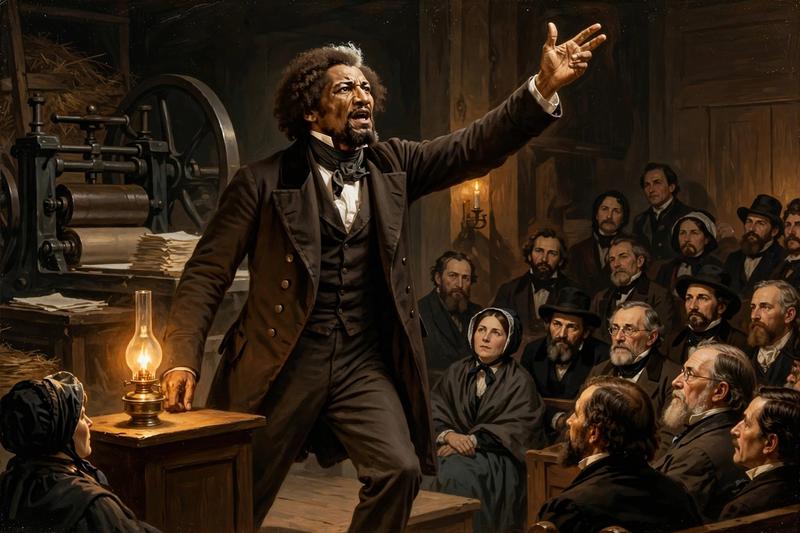
5. Frederick Douglass
- Name of the Covenant: The Covenant of Earnest Struggle
- Description with Source Text: Frederick Douglass was born enslaved in Maryland, escaped to freedom in 1838, and became the foremost Black voice of 19th-century American abolition through his autobiographies (beginning with the Narrative of 1845), his newspaper The North Star (founded 1847), and his oratory. On August 3, 1857, in a speech at Canandaigua, New York marking the anniversary of West India Emancipation, he declared: “If there is no struggle, there is no progress.” He held that all concessions yet made to human liberty had been born of earnest struggle.
- One Guiding Principle: Freedom is never granted by the powerful; it is won through persistent, principled struggle — moral, intellectual, and political.
- Sign Hand Movement: A closed fist raised to shoulder height, then opened deliberately, finger by finger — symbolizing struggle that matures into earned freedom.
- Token Arm Movement and Body Movement: A firm step forward with the right foot, right arm thrusting upward at a diagonal — embodying the advance of liberty through effort.
- Metaphysical Epiphany: Understanding that progress is not a gift of history but the harvest of courage, and that comfort purchased with silence is complicity.
- The Proclamation: “I commit to struggle earnestly for what is right, refusing the comfort of silence.”
- Two or Three Witnesses: Harriet Tubman, Sojourner Truth, and William Lloyd Garrison, fellow abolitionists whose words and deeds pressed the same unyielding demand.
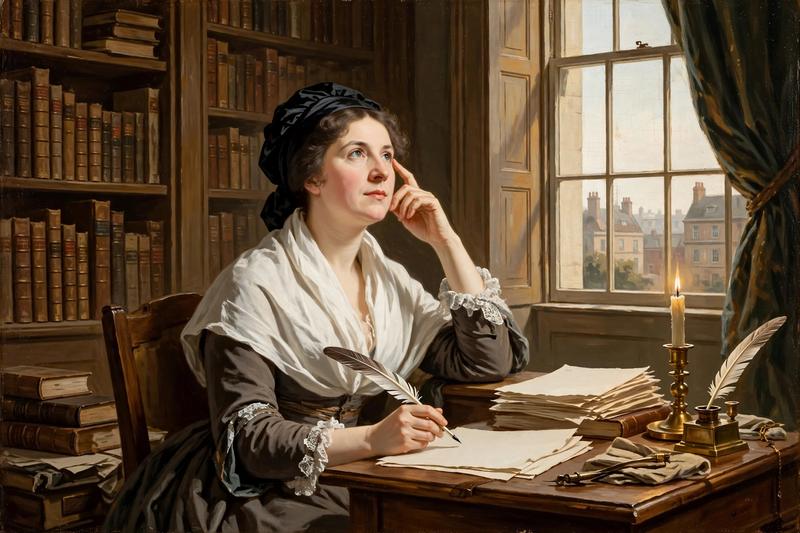
6. Mary Wollstonecraft
- Name of the Covenant: The Covenant of Equal Mind
- Description with Source Text: Mary Wollstonecraft published A Vindication of the Rights of Woman in 1792, the first sustained philosophical argument that women are not naturally inferior to men but made so by the denial of education. Writing against the leading political thought of her day — including Rousseau’s claim that women exist to please men — she argued that if women share the same rational nature as men, they must share the same rights. She died in 1797, ten days after the birth of her daughter Mary Shelley, but her argument became the founding text of modern feminism.
- One Guiding Principle: Reason knows no sex; where the mind is equal, the rights must be equal, and any society that wastes the intellect of half its members impoverishes itself.
- Sign Hand Movement: Forefinger tapping the temple twice, then the hand opening outward — symbolizing thought recognized and then released into the world.
- Token Arm Movement and Body Movement: Standing tall, chin level, both hands rising from waist to shoulder height with palms facing forward — embodying the dignity of equal reason claiming its rightful place.
- Metaphysical Epiphany: Realizing that injustice begins in the mind — in who is permitted to think — and that the liberation of reason is the first liberation of all.
- The Proclamation: “I commit to honor the equal mind in every person, and to refuse any custom that diminishes it.”
- Two or Three Witnesses: Susan B. Anthony, John Stuart Mill, and Simone de Beauvoir, who each carried the argument for women’s equal rights into later generations.
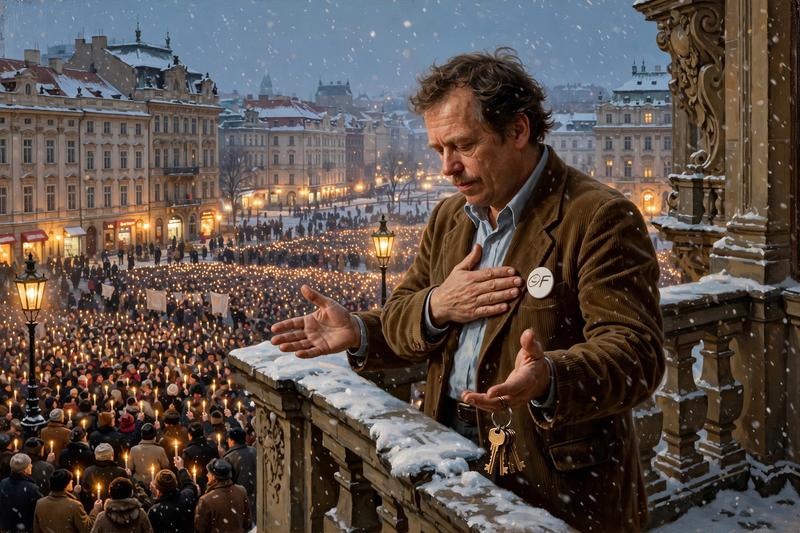
7. Václav Havel
- Name of the Covenant: The Covenant of Living in Truth
- Description with Source Text: Václav Havel, a Czech playwright, became the leading voice of dissent against communist rule in Czechoslovakia. In January 1977 he was a founding spokesman of Charter 77, a civic appeal demanding the regime respect the human rights it had signed onto in the Helsinki Accords. His 1978 essay “The Power of the Powerless” argued that totalitarian systems survive on the ritual participation of ordinary people in lies — and that the dissident’s true power is simply to “live within the truth.” Imprisoned from 1979 to 1983, he refused early release in exchange for exile, and after the Velvet Revolution of 1989 became president of Czechoslovakia.
- One Guiding Principle: A system built on lies depends on everyone’s participation in the lie; each act of truthfulness, however small, is a genuine act of resistance.
- Sign Hand Movement: Right hand removing an invisible mask from the face, letting it fall — symbolizing the refusal to perform the lie.
- Token Arm Movement and Body Movement: Both hands placed flat over the chest, then opened outward toward others — embodying the truth spoken from the heart and offered to the community.
- Metaphysical Epiphany: Understanding that the powerful are powerless without the daily cooperation of the powerless, and that integrity is not a private virtue but a political force.
- The Proclamation: “I commit to live in truth, refusing to lend my life to lies, however small the lie or great the pressure.”
- Two or Three Witnesses: Andrei Sakharov, Aleksandr Solzhenitsyn, and Elie Wiesel, fellow witnesses against totalitarianism who refused to let conscience be silenced.
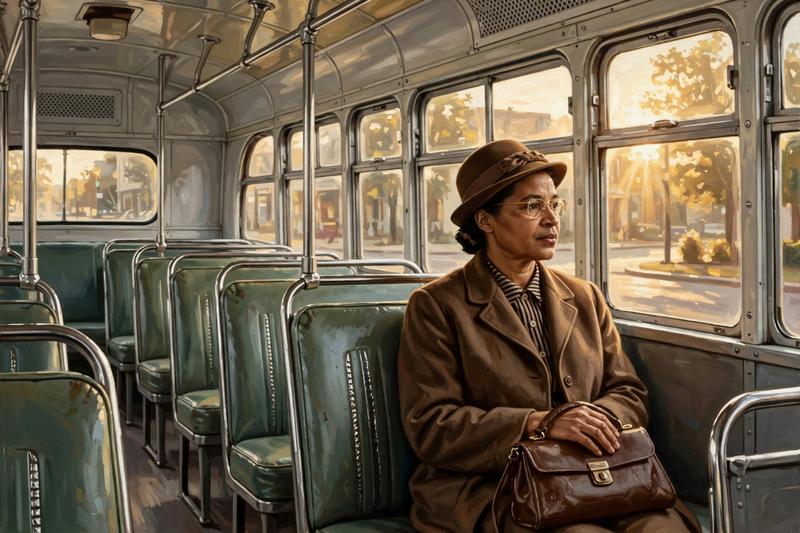
8. Rosa Parks
- Name of the Covenant: The Covenant of Quiet Refusal
- Description with Source Text: On December 1, 1955, Rosa Parks, a seamstress and secretary of the Montgomery, Alabama chapter of the NAACP, was arrested for refusing to give up her bus seat to a white passenger. She was not the first Black woman to be arrested for this — but her quiet dignity, her long record of civic organizing, and the NAACP’s strategic decision made her case the spark of the Montgomery bus boycott, a 381-day mass protest that ended segregation on the city’s buses and launched a new phase of the civil rights movement. She later said her act was not about one seat, but about the accumulated weight of injustice.
- One Guiding Principle: Ordinary courage, exercised at the right moment, moves history; one person’s refusal to cooperate with injustice can awaken a whole people.
- Sign Hand Movement: Hand pressed flat and steady against the chest, fingers together, unmoving — symbolizing the stillness of a settled conscience.
- Token Arm Movement and Body Movement: Sitting upright and motionless, then rising slowly and standing firm with shoulders square — embodying the seated refusal that became a standing nation.
- Metaphysical Epiphany: Realizing that power assumes compliance, and that the quiet withdrawal of compliance can be more revolutionary than any shout.
- The Proclamation: “I commit to refuse cooperation with injustice, and to stand still where conscience requires it.”
- Two or Three Witnesses: Martin Luther King Jr., John Lewis, and Nelson Mandela, each of whom turned the discipline of nonviolent refusal into mass liberation.
9. Andrei Sakharov
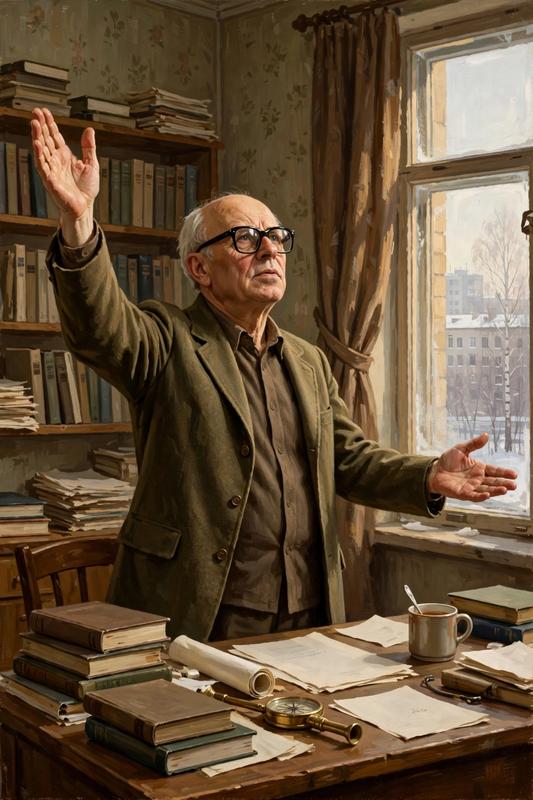
- Name of the Covenant: The Covenant of Conscience Over Power
- Description with Source Text: Andrei Sakharov was the Soviet Union’s leading nuclear physicist — a principal designer of its hydrogen bomb — who turned his standing into a weapon of conscience. His 1968 essay “Reflections on Progress, Peaceful Coexistence, and Intellectual Freedom” made him the most prominent Soviet dissident. Awarded the Nobel Peace Prize in 1975, he was forbidden to travel to Oslo, so his wife Elena Bonner read his lecture, “Peace, Progress, Human Rights,” declaring: “Peace, progress, human rights — these three goals are insolubly linked to one another: it is impossible to achieve one of these goals if the other two are ignored.” For protesting the Soviet invasion of Afghanistan, he was stripped of his honors and exiled to the closed city of Gorky from 1980 to 1986.
- One Guiding Principle: Knowledge carries responsibility: those who understand power most deeply bear the greatest duty to speak when power is abused, regardless of the cost.
- Sign Hand Movement: Right hand raised, palm open and facing forward at eye level — symbolizing the witness who speaks truth to power.
- Token Arm Movement and Body Movement: Both arms crossing over the chest, then sweeping outward and down to the sides — embodying conscience breaking free from the state’s embrace.
- Metaphysical Epiphany: Understanding that the privileges granted by power become chains the moment they are used to silence conscience, and that the mind’s freedom is worth more than every honor power can bestow.
- The Proclamation: “I commit to let conscience govern my knowledge, and to speak against power when power does wrong.”
- Two or Three Witnesses: Václav Havel, Aleksandr Solzhenitsyn, and Elena Bonner, whose courage in the Soviet dissident movement witnessed the same inseparable bond of peace, progress, and human rights.
10. Harriet Tubman
- Name of the Covenant: The Covenant of the Conductor
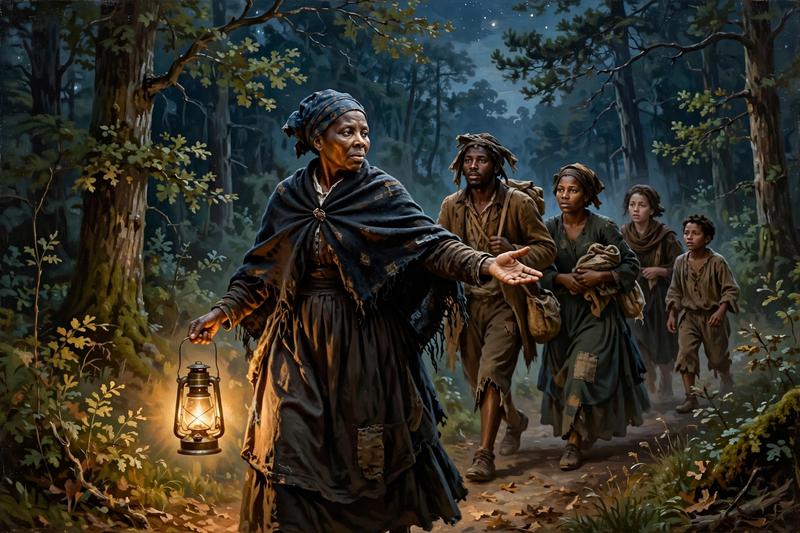
- Description with Source Text: Harriet Tubman escaped slavery in Maryland in 1849 and returned to the South some thirteen times to guide enslaved people to freedom through the network known as the Underground Railroad, for which she became known as “Moses.” She is recorded as saying she never lost a passenger. During the Civil War she served the Union Army as a scout, spy, and nurse, and on June 2, 1863, she led 150 Black Union soldiers in the Combahee Ferry Raid in South Carolina, liberating more than 700 enslaved people — the first woman in American history to lead a major armed military operation. She spent her later years advocating for women’s suffrage.
- One Guiding Principle: Freedom is a path to be walked with others, not alone; those who reach liberty first owe their hand to those still in bondage.
- Sign Hand Movement: Hand extended backward, fingers curled in a beckoning gesture — symbolizing the conductor calling others forward to freedom.
- Token Arm Movement and Body Movement: Walking forward several paces while reaching the right arm back, palm open, then drawing it forward to the chest — embodying the guide who goes ahead and brings others along.
- Metaphysical Epiphany: Realizing that one’s own freedom is incomplete until it is shared, and that the journey to liberty is made real by each person one carries along the way.
- The Proclamation: “I commit to lead others toward freedom, and to measure my own liberty by the freedom of those I help.”
- Two or Three Witnesses: Frederick Douglass, Sojourner Truth, and Harriet Beecher Stowe, whose abolitionist work likewise turned private conscience into public liberation.
11. William Wilberforce
- Name of the Covenant: The Covenant of Long Persistence
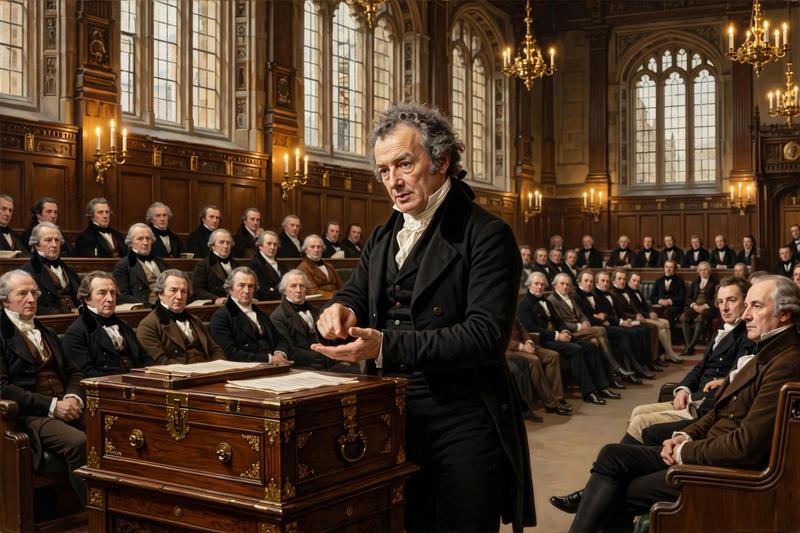
- Description with Source Text: William Wilberforce served in the British Parliament for decades with a single moral mission: the abolition of the transatlantic slave trade. Beginning in 1787 he introduced abolition motions year after year, enduring defeat after defeat, ridicule, and political isolation. His persistence was rewarded in 1807 when Parliament passed the Slave Trade Act abolishing the trade; the Slavery Abolition Act of 1833, ending slavery throughout the British Empire, was passed just days before his death on July 29, 1833.
- One Guiding Principle: Justice delayed is not justice denied; the conscience of a nation changes only through the patient, unrelenting witness of those who refuse to stop.
- Sign Hand Movement: Right hand formed into a slow, steady tapping on an open left palm — symbolizing patient, repeated pressure against a hardened heart.
- Token Arm Movement and Body Movement: Taking slow, deliberate steps forward, each with the arm rising and falling in measured rhythm — embodying the decades-long march of persistence.
- Metaphysical Epiphany: Understanding that defeat is not failure when the cause is just, and that time itself becomes an ally to those who refuse to abandon it.
- The Proclamation: “I commit to persist in the cause of justice, year after year, until the work is done.”
- Two or Three Witnesses: Frederick Douglass, William Lloyd Garrison, and Olaudah Equiano, abolitionists on both sides of the Atlantic whose long labors likewise ended in emancipation.
12. John Lewis
- Name of the Covenant: The Covenant of Good Trouble
- Description with Source Text: John Lewis joined the civil rights movement as a student, riding the Freedom Rides of 1961 and chairing the Student Nonviolent Coordinating Committee. At 23 he was the youngest speaker at the March on Washington in 1963. On March 7, 1965 — Bloody Sunday — he led marchers across the Edmund Pettus Bridge in Selma, Alabama, where state troopers beat him and fractured his skull; the televised brutality helped spur passage of the Voting Rights Act of 1965. He went on to serve in the United States Congress from 1987 until his death in 2020, urging young people to make “good trouble, necessary trouble” in the cause of justice.
- One Guiding Principle: Conscience sometimes requires disorder: when laws are unjust, the faithful citizen’s duty is to trouble them peacefully until they are changed.
- Sign Hand Movement: Right hand forming a peace sign, held high — symbolizing peaceful defiance that refuses to hate.
- Token Arm Movement and Body Movement: Walking forward in an unhurried line, arms linked with those beside, advancing step by step — embodying the march that carries justice forward.
- Metaphysical Epiphany: Realizing that order without justice is only oppression wearing a calm face, and that the right kind of trouble is an act of love toward one’s country.
- The Proclamation: “I commit to make good trouble, necessary trouble, whenever justice requires it of me.”
- Two or Three Witnesses: Martin Luther King Jr., Rosa Parks, and Bayard Rustin, fellow architects of the nonviolent movement who taught a generation how to march.
Figures