Signs, Tokens & Covenants — Order of Eternal Reality
Hindu / Vedantic Tradition
Canon and sources: the Upanishads, the Bhagavad Gita, Advaita teaching, and the contemplative philosophy of the Vedic tradition. Each entry is grounded in a figure’s real story as told in the tradition’s texts; teachings are paraphrased rather than quoted, and gestures are simple universal movements chosen for dignity, not sacred mudras claimed from sources I cannot verify.
1. Krishna
- Name of the Covenant: The Covenant of Devotion
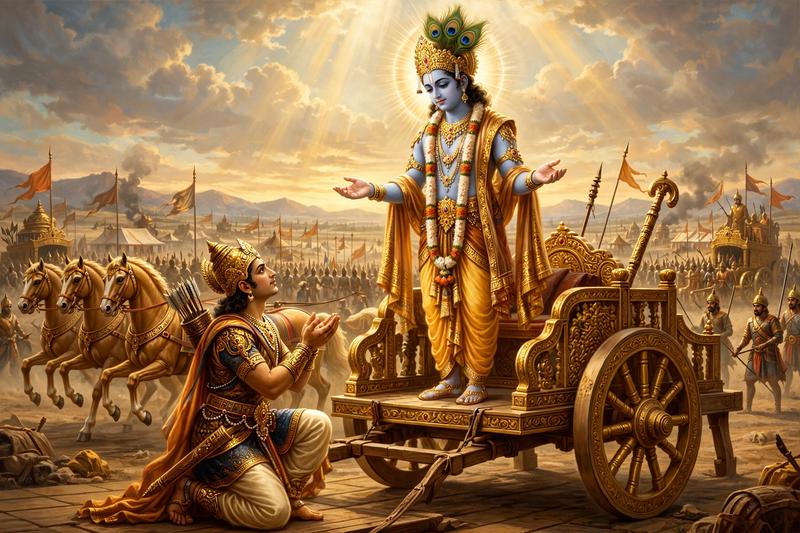
- Description with Source Text: In the Bhagavad Gita, Krishna — charioteer, friend, and the Supreme Person revealed on the battlefield of Kurukshetra — answers Arjuna’s despair by teaching the paths of action, knowledge, and, above all, single-hearted devotion. He declares himself the refuge of all beings and asks that the devotee fix the mind upon him, offer every act to him, and take shelter in him alone.
- One Teaching: Surrender the self completely to the Divine and let every act of life become an offering — devotion, not birth or ritual alone, is what binds the soul to God.
- Sign Hand Movement: Both hands open, palms turned upward and slightly raised, as one receiving a gift.
- Token Arm Movement and Body Movement: From a standing position, bend the knees slightly and bow the head and shoulders forward, arms lowered at the sides — the posture of one who kneels before the Divine.
- Metaphysical Epiphany: Realizing that the self is not its own master but belongs to the Eternal, and that surrender is not defeat but homecoming.
- The Proclamation: “I commit to surrender my will to the Divine and offer every act of my life in devotion.”
- Two or Three Witnesses: Sabari, who waited a lifetime to offer wild berries to Rama; Gajendra, the elephant-king who cried out to Vishnu in surrender; Ambarisha, the king whose devotion no force could break.
2. Arjuna
- Name of the Covenant: The Covenant of Selfless Action
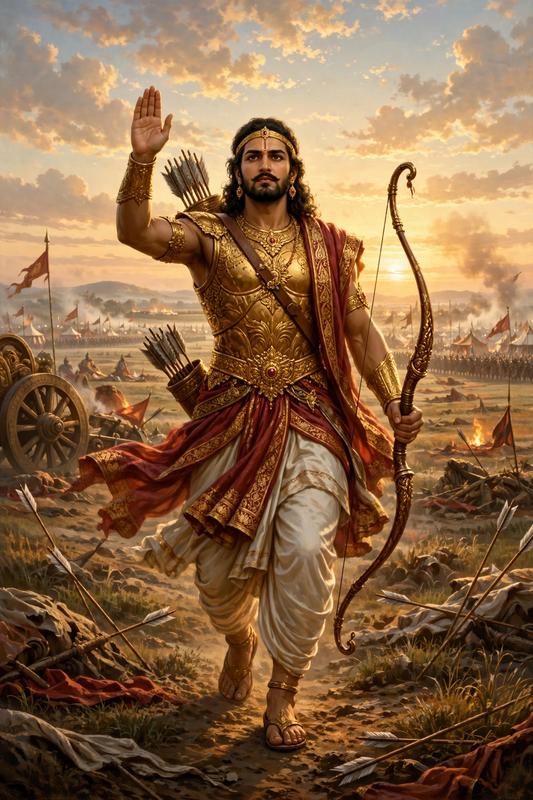
- Description with Source Text: In the Bhagavad Gita, the warrior Arjuna stands paralyzed between duty and grief on the eve of battle, his bow slipping from his hands. Under Krishna’s teaching he rises again — not with his doubts erased, but with his understanding transformed: he will fight because it is his duty, renouncing claim to the fruits of his actions.
- One Teaching: Do what duty requires, fully and excellently, but release all grasping after results — the act is yours, the outcome belongs to the order of things.
- Sign Hand Movement: Right hand raised, palm forward and fingers together, in the gesture of one taking up a task.
- Token Arm Movement and Body Movement: Step forward with the right foot, arms swinging naturally at the sides, walking steadily ahead as one who moves into the work appointed to him.
- Metaphysical Epiphany: Realizing that bondage comes not from action but from attachment to its fruits, and that freedom is found inside the duty itself.
- The Proclamation: “I commit to do my duty without grasping after its fruits.”
- Two or Three Witnesses: Bhishma, who held his terrible vow to the end though it cost him everything; Yudhishthira, who would not abandon dharma even in the dice hall; Vibhishana, who left his own brother’s side to stand with righteousness.
3. Rama
- Name of the Covenant: The Covenant of Righteous Duty
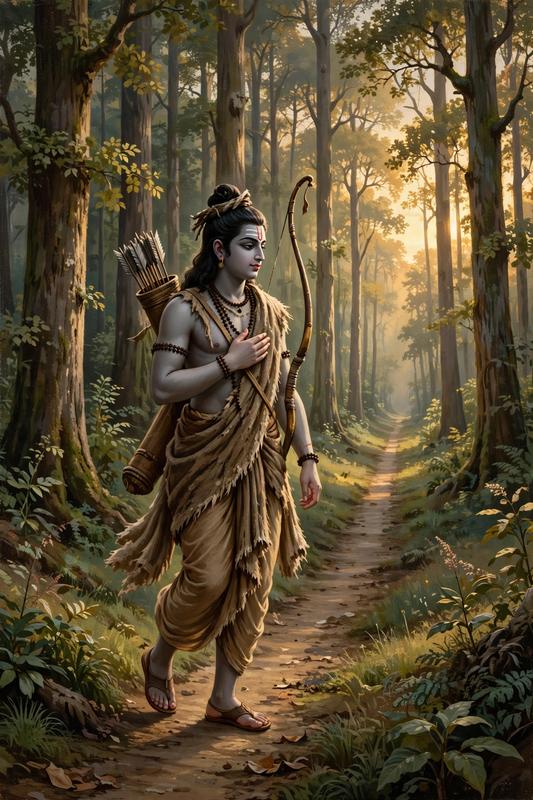
- Description with Source Text: In the Ramayana of Valmiki, Prince Rama gives up the throne of Ayodhya the night before his coronation to honor his father Dasaratha’s promise, accepting fourteen years of forest exile without resentment. Through every trial — Sita’s abduction, the war in Lanka — he holds himself to the law of righteousness even when it costs him dearly.
- One Teaching: Hold to what is right even when it costs you comfort, power, or love — righteousness is the measure of a person, not success.
- Sign Hand Movement: Right hand over the heart, held steady.
- Token Arm Movement and Body Movement: Stand upright and take one deliberate step forward, spine straight, as one walking a narrow straight path.
- Metaphysical Epiphany: Realizing that dharma is not a rule imposed from outside but the inner law of the soul, and that keeping it is what makes a life noble.
- The Proclamation: “I commit to uphold what is right, whatever it costs me.”
- Two or Three Witnesses: Bhishma, bound by his vow to a throne he never took; Yudhishthira, who chose the hard path of truth; Vibhishana, who forsook a kingdom for righteousness.
4. Sita
- Name of the Covenant: The Covenant of Endurance
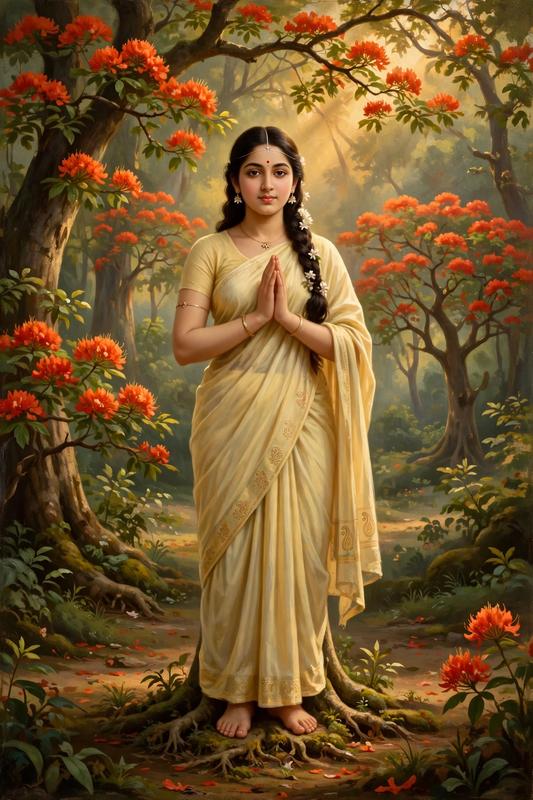
- Description with Source Text: In the Ramayana of Valmiki, Sita follows Rama into exile by choice, endures captivity in Ravana’s Lanka unbroken, and passes through fire to prove her purity — and later, when abandoned by Rama’s decree, raises her sons in the forest with unshaken dignity. Her strength is never loud; it is the quiet refusal to be diminished by suffering.
- One Teaching: Meet suffering with inner dignity and faithfulness — endurance rooted in truth is itself a form of power.
- Sign Hand Movement: Palms pressed together at the chest, held quietly and still.
- Token Arm Movement and Body Movement: Stand with feet rooted and arms folded gently across the heart, head level and steady, like a tree that bends in no wind.
- Metaphysical Epiphany: Realizing that the soul’s purity cannot be taken by any external force, and that suffering borne in faithfulness becomes strength.
- The Proclamation: “I commit to bear hardship with dignity and remain faithful to what is true.”
- Two or Three Witnesses: Savitri, who faced down death itself for her husband; Ahalya, who endured a long curse in stillness until grace restored her.
5. Nachiketa
- Name of the Covenant: The Covenant of Inquiry
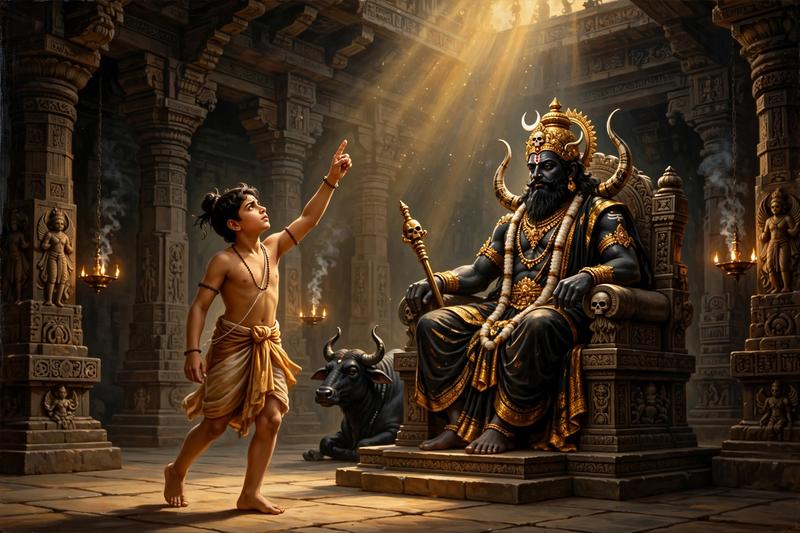
- Description with Source Text: In the Katha Upanishad, the boy Nachiketa is given to Death itself by his angry father, and stands before Yama unafraid, refusing riches, pleasures, and long life in favor of a single question: what happens to the self after death? Yama, moved by his persistence, teaches him the imperishable Self.
- One Teaching: Choose the lasting good over the pleasant — ask the deepest question and do not trade it away for comfort.
- Sign Hand Movement: Right hand raised with index finger pointing upward, as one asking a question of heaven.
- Token Arm Movement and Body Movement: Take one step forward with head raised and eyes lifted, as one approaching a great mystery without fear.
- Metaphysical Epiphany: Realizing that the Self does not die with the body, and that the one who seeks truth with a whole heart will be taught.
- The Proclamation: “I commit to seek the lasting truth and never trade the deep question for comfort.”
- Two or Three Witnesses: Maitreyi, who asked Yajnavalkya what use wealth is if it cannot grant immortality; Janaka, the king who sought the truth of the Self while ruling his kingdom.
6. Yajnavalkya
- Name of the Covenant: The Covenant of Self-Knowledge
- Description with Source Text: In the Brihadaranyaka Upanishad, the sage Yajnavalkya — victor in King Janaka’s great debate — teaches that the Self is not this, not that: not the body, not the senses, not the mind, but the unseen Seer behind all seeing. To his wife Maitreyi he explains that it is for the sake of the Self that all things are dear.
- One Teaching: Turn the gaze inward and know the Self — behind every thought and perception stands the one unchanging Witness, and knowing it is liberation.
- Sign Hand Movement: Both hands rest lightly over the eyes for a moment, then are lowered — the turning of sight from outward to inward.
- Token Arm Movement and Body Movement: Sit or stand in stillness, hands resting palms-down on the thighs, breath slow — the settled posture of one looking within.
- Metaphysical Epiphany: Realizing that I am not the body, not the thoughts, not the passing moods, but the witnessing awareness in which all of them appear.
- The Proclamation: “I commit to know my true Self, the witness within.”
- Two or Three Witnesses: Maitreyi, who renounced wealth to pursue immortality through self-knowledge; Janaka, who received the teaching of the Self from the sage.
7. Gargi
- Name of the Covenant: The Covenant of Fearless Questioning
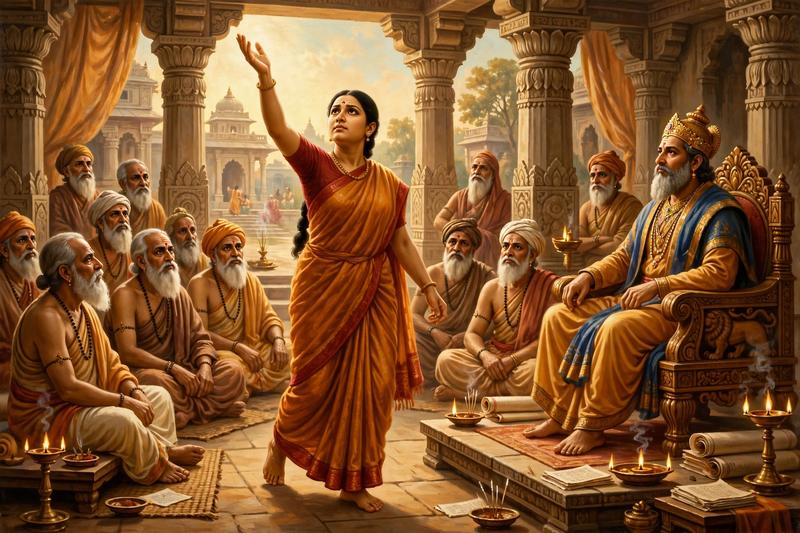
- Description with Source Text: In the Brihadaranyaka Upanishad, Gargi Vachaknavi — honored as a Brahmavadini, a knower of ultimate truth — rises in King Janaka’s assembly and challenges the great sage Yajnavalkya himself. She presses him past every answer: on what is this woven, and that, until he names the Imperishable — the unseen ground on which all worlds are woven warp and woof.
- One Teaching: Question boldly and honestly until you reach the ground of things — no authority, however revered, is above a true question.
- Sign Hand Movement: Right hand raised, palm open toward the heavens, as one demanding an answer of the sky.
- Token Arm Movement and Body Movement: Stand tall and take a half-step forward, chin level, as one who rises to speak truth in the assembly of the learned.
- Metaphysical Epiphany: Realizing that the deepest reality yields itself to fearless inquiry, and that the question itself is a form of worship.
- The Proclamation: “I commit to ask the true question, fearlessly, until I reach the ground of being.”
- Two or Three Witnesses: Maitreyi, who questioned her husband about the price of immortality; Uddhava, who questioned Krishna about dharma and received the Uddhava Gita.
8. Adi Shankaracharya
- Name of the Covenant: The Covenant of Discrimination
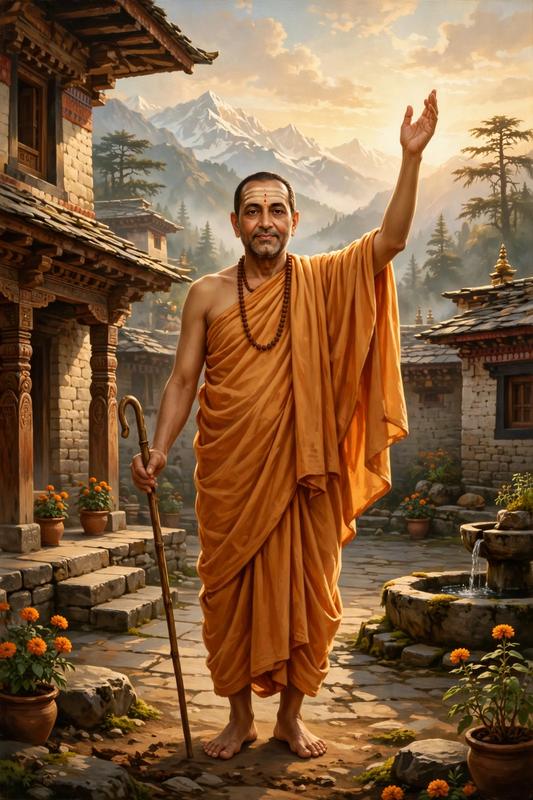
- Description with Source Text: Adi Shankaracharya, the great teacher who revived Advaita Vedanta — the teaching of non-duality — systematized the Upanishadic wisdom in his commentaries and works such as the Vivekachudamani, traditionally attributed to him. His central instrument is viveka: the steady discrimination between the eternal and the ephemeral, the real and the unreal, until the seeker knows the Self as one with Brahman.
- One Teaching: Learn to distinguish the eternal from the passing — what changes is not your true nature; what never changes is.
- Sign Hand Movement: Hold both hands apart at chest height, palms facing each other, as if weighing two things and setting them apart.
- Token Arm Movement and Body Movement: Raise one hand slowly upward while lowering the other toward the earth — the separating of the permanent from the transient.
- Metaphysical Epiphany: Realizing that Atman and Brahman are one, and that all suffering comes from mistaking the changing for the real.
- The Proclamation: “I commit to discern the eternal from the passing and anchor my identity in what never changes.”
- Two or Three Witnesses: Maitreyi, who chose knowledge of the immortal over perishable wealth; Janaka, who ruled a kingdom while inwardly renounced; Yajnavalkya’s teaching of the Self as “not this, not that” witnesses the same discrimination.
9. Dhruva
- Name of the Covenant: The Covenant of Steadfast Resolve
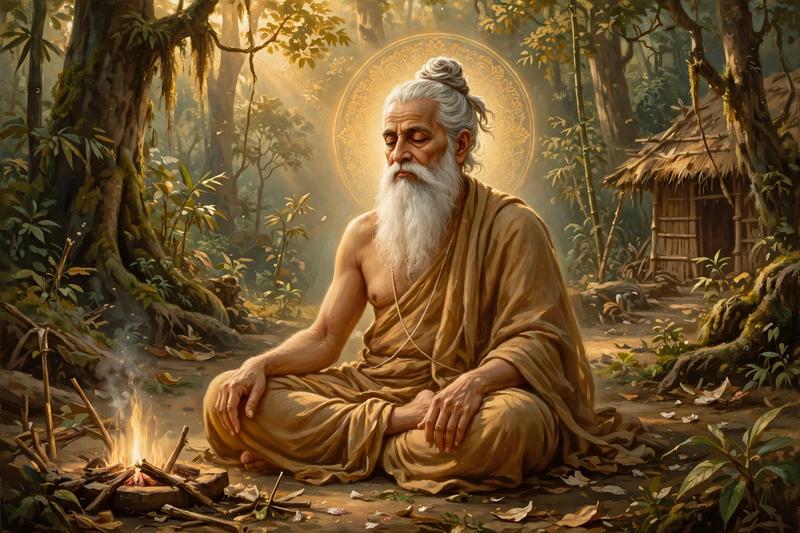
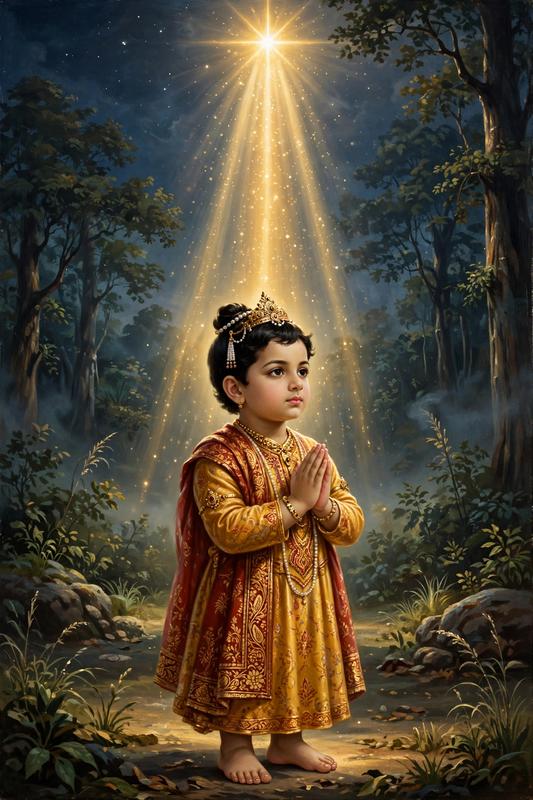
- Description with Source Text: In the Bhagavata Purana, the five-year-old prince Dhruva, wounded by his stepmother’s scorn, leaves the palace to seek a throne no one can take from him. Guided by the sage Narada, he meditates on Vishnu in the forest with such single-pointed resolve that the gods tremble — and he is granted a fixed place in the heavens as the pole star.
- One Teaching: Fix your resolve on the highest goal and do not waver — a heart that will not turn aside attains what the wavering never reach.
- Sign Hand Movement: Both hands pressed together, fingers pointing upward, held firm and unmoving.
- Token Arm Movement and Body Movement: Stand perfectly still, feet planted, arms at the sides, gaze fixed on a single point ahead — the stillness of unbroken concentration.
- Metaphysical Epiphany: Realizing that a resolve fixed on the Eternal outlasts every insult and obstacle, and becomes a fixed star by which others steer.
- The Proclamation: “I commit to hold my resolve unbroken, fixed on the highest goal.”
- Two or Three Witnesses: Ekalavya, whose resolve toward his guru never wavered though he was refused as a pupil; Sabari, who kept her vigil through long years until Rama came.
10. Prahlada
- Name of the Covenant: The Covenant of Unshakeable Devotion
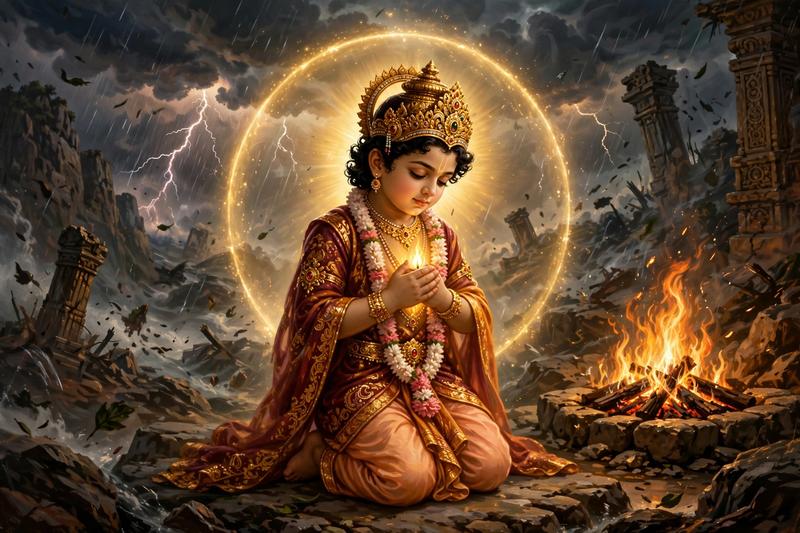
- Description with Source Text: In the Bhagavata Purana, the boy Prahlada remains devoted to Vishnu though his father, the demon-king Hiranyakashipu, tries to kill him again and again — with elephants, serpents, poison, and fire. Unmoved by threats and unpoisoned by hatred, Prahlada is at last rescued when Vishnu bursts from a pillar as Narasimha, the man-lion, to destroy the tyrant.
- One Teaching: Hold fast to the Divine through every trial and every threat — devotion that no force can shake is itself the protection.
- Sign Hand Movement: Right hand over the heart, pressed firmly, as guarding a flame within.
- Token Arm Movement and Body Movement: Kneel on one knee with head bowed and both hands resting on the heart — the posture of one sheltered in devotion while storms rage.
- Metaphysical Epiphany: Realizing that the Lord dwells even in a pillar — in every place, at every moment — and that love for the Divine is stronger than any power raised against it.
- The Proclamation: “I commit to hold my devotion unshaken, whatever rises against it.”
- Two or Three Witnesses: Sabari, whose devotion outlasted a lifetime of waiting; Ambarisha, whose devotion no curse could touch.
11. Hanuman
- Name of the Covenant: The Covenant of Selfless Service
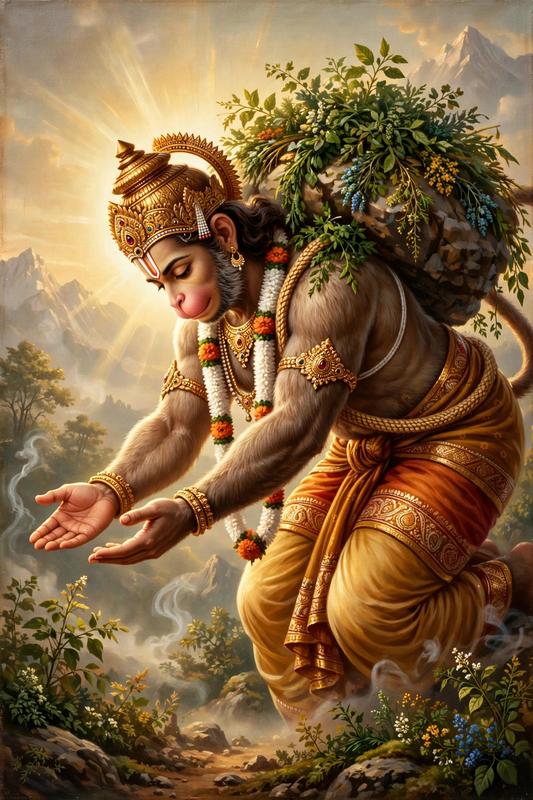
- Description with Source Text: In the Ramayana of Valmiki, Hanuman — the mighty son of the wind — places his boundless strength entirely at Rama’s service: leaping the ocean to find Sita, carrying the mountain of healing herbs, burning Lanka, and fighting without thought of reward. His greatness is measured not by his power but by the totality of his offering.
- One Teaching: Place your strength in service of the good without thought of reward — the servant’s heart is the highest seat of devotion.
- Sign Hand Movement: Both hands open at the sides, palms forward, as one offering strength to another’s use.
- Token Arm Movement and Body Movement: Step forward and bow deeply from the waist, arms extended forward with open hands — the offering of oneself in service.
- Metaphysical Epiphany: Realizing that power finds its true meaning only when given away, and that the servant of the Divine carries the Divine within.
- The Proclamation: “I commit to serve the good with all my strength, asking nothing in return.”
- Two or Three Witnesses: Jatayu, who gave his life trying to rescue Sita; Uddhava, who served as Krishna’s devoted messenger and disciple.
12. Draupadi
- Name of the Covenant: The Covenant of Dignity
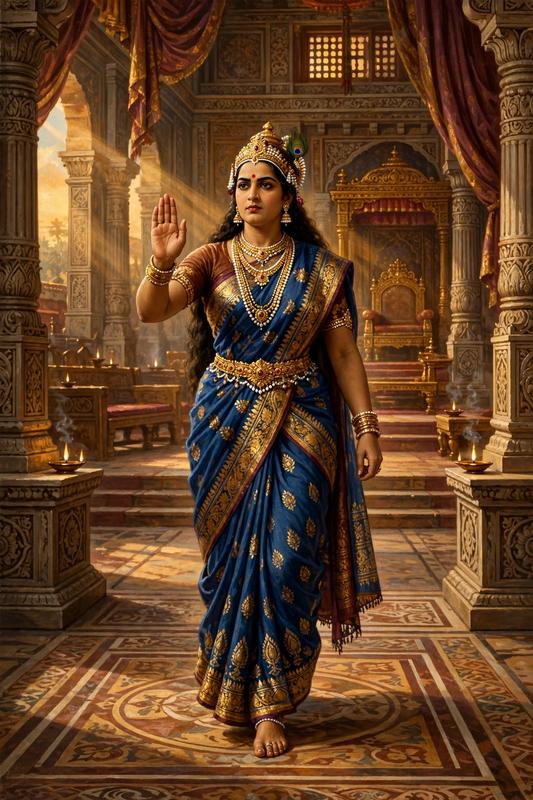
- Description with Source Text: In the Mahabharata’s Sabha Parva, Draupadi — dragged into the assembly hall after Yudhishthira stakes and loses her at dice — refuses to be silenced. She puts a single piercing question to the elders: by what dharma was I wagered, by one who had already lost himself? Her demand for truth shames the court and sets in motion the reckoning of the war.
- One Teaching: When wronged, stand in your dignity and demand the truth be spoken — one clear question asked in righteousness can shake a hall of kings.
- Sign Hand Movement: Right hand raised, palm facing outward at shoulder height, in the gesture of one who stops injustice and demands to be heard.
- Token Arm Movement and Body Movement: Stand upright with shoulders back and chin raised, taking one firm step into the center of the assembly — refusing the margins assigned to the wronged.
- Metaphysical Epiphany: Realizing that dignity is not granted by any assembly but belongs to the soul itself, and that truth spoken without fear carries its own protection.
- The Proclamation: “I commit to stand in my dignity and speak the truth, even before the powerful.”
- Two or Three Witnesses: Ahalya, whose dignity was restored after long injustice; Kunti, who bore exile and hardship with unbroken nobility.
Figures