Signs, Tokens & Covenants — The Order of Sacred Earth
Each entry names a covenant drawn from the earth-centered spiritual tradition, with a sign, a token, an epiphany, a proclamation, and witnesses from within the same tradition.
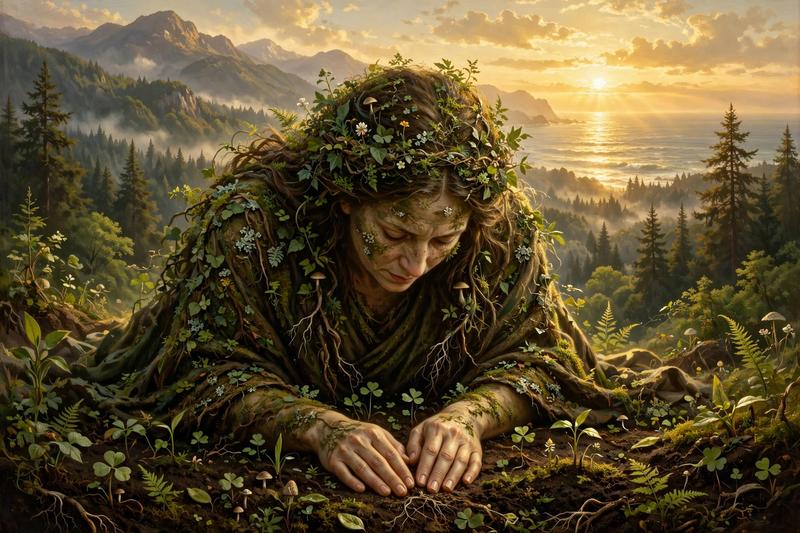
1. Gaia
- Name of the Covenant: The Covenant of the Living Earth
- Description with Source Text: In the oldest Greek cosmogony, preserved in the tradition associated with Hesiod, Gaia — Earth herself — is the first being to emerge from the primordial Chaos, and from her all other gods, mountains, and seas are born. She is not a goddess of the earth but the Earth itself as a living, generative presence, mother of all that lives.
- One Guiding Principle: The Earth is a living whole to which we belong; we are her children, not her owners.
- Sign Hand Movement: Both hands open, palms pressed gently downward toward the ground, acknowledging the Earth beneath.
- Token Arm Movement and Body Movement: Kneeling once, touching the forehead lightly to the fingertips of the hands resting on the ground, then rising.
- Metaphysical Epiphany: Realizing that the ground beneath one’s feet is a living presence, and that all life is one body she carries.
- The Proclamation: “I commit to honor the Earth as a living Mother, and to act as her grateful child.”
- Two or Three Witnesses: Demeter and Persephone, whose cycle of grain and season expresses Gaia’s own rhythm; and Pachamama, the Andean Earth Mother, who receives the same reverence under another sky.
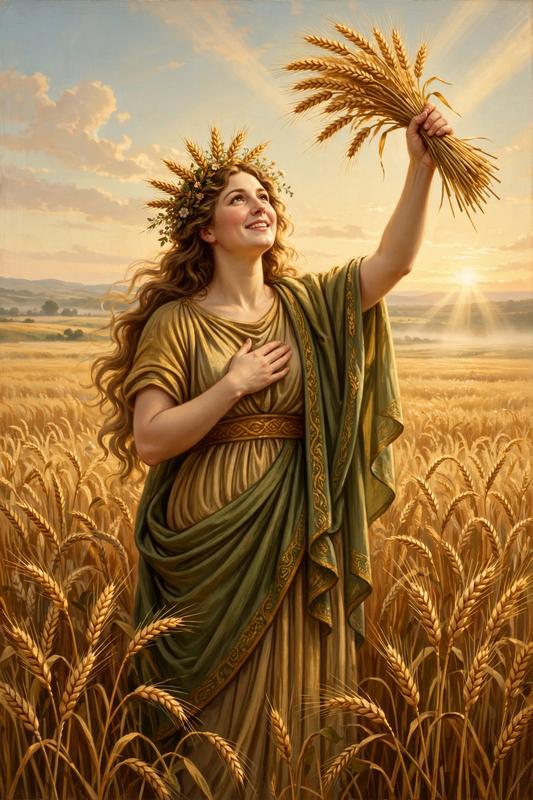
2. Demeter
- Name of the Covenant: The Covenant of the Harvest and the Hearth
- Description with Source Text: In the Greek myth of the Homeric Hymn to Demeter, Demeter, goddess of grain and cultivated earth, searches the world in grief when her daughter Persephone is taken to the underworld; her mourning withers the crops, and her joy at the reunion restores them. The Eleusinian Mysteries, the most revered rites of the ancient Greek world, were founded on this story of loss, grief, and renewal.
- One Guiding Principle: The cycles of the earth — sowing, growth, harvest, and fallow — teach that grief and loss are part of abundance, not its opposite.
- Sign Hand Movement: Right hand held over the heart, then opened outward toward the sky, symbolizing the giving of grain.
- Token Arm Movement and Body Movement: Arms raised upward as though offering sheaves of wheat, then bowed forward in gratitude.
- Metaphysical Epiphany: Realizing that every harvest requires a letting-go, and that the earth’s generosity flows through cycles of dying and return.
- The Proclamation: “I commit to honor the cycles of sowing and reaping, and to grieve and rejoice with the turning of the seasons.”
- Two or Three Witnesses: Persephone, whose return is the harvest’s promise; Selu, the Cherokee Corn Mother, whose body became the corn itself; and Gaia, the Earth from whom the grain grows.
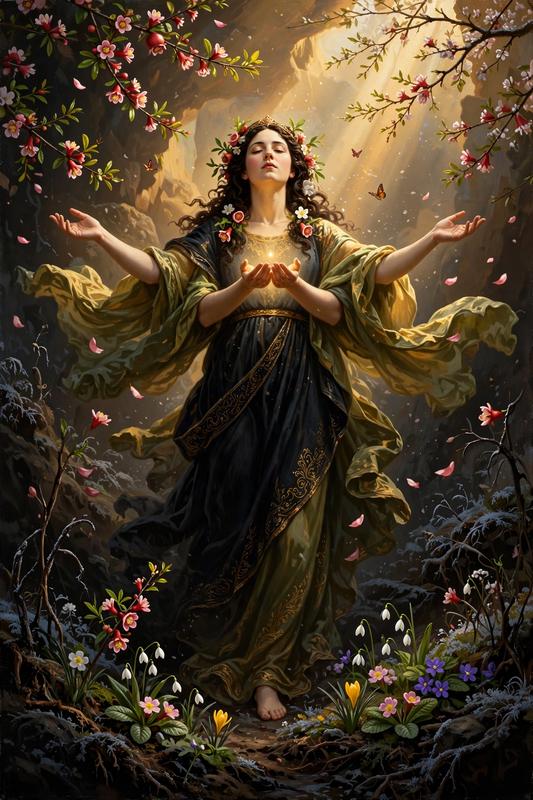
3. Persephone
- Name of the Covenant: The Covenant of Descent and Return
- Description with Source Text: In the Homeric Hymn to Demeter, Persephone is taken to the underworld, where she eats the seeds of the pomegranate and is thereby bound to return there for part of each year. Her descent brings winter; her return brings spring. She became queen of the underworld, honored in the Eleusinian Mysteries as the one who passes through death and returns.
- One Guiding Principle: Descent into darkness is not defeat; what returns from the deep carries new life.
- Sign Hand Movement: Hands cupped together holding an invisible seed, held close to the chest.
- Token Arm Movement and Body Movement: Bending low until the hands touch the ground, then rising slowly with arms opening wide like a blooming flower.
- Metaphysical Epiphany: Realizing that the seed must fall into the dark earth before it can rise, and that winter is not the end of the story.
- The Proclamation: “I commit to descend with courage into the dark places and to rise again bearing new life.”
- Two or Three Witnesses: Inanna, whose descent to the underworld and return mirrors the same passage; Ereshkigal, who rules the realm Persephone enters; and Demeter, whose grief and joy set the rhythm of the return.
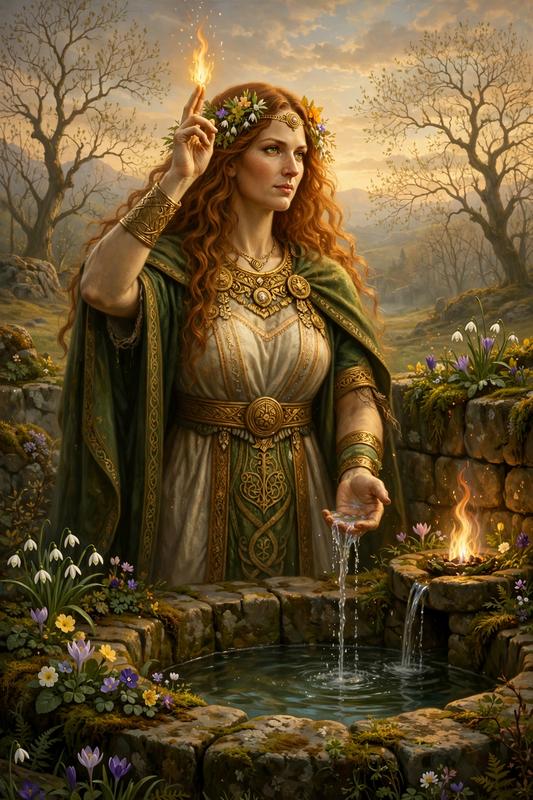
4. Brigid
- Name of the Covenant: The Covenant of the Sacred Flame and the Healing Well
- Description with Source Text: In Irish tradition, Brigid is a daughter of the Dagda and a member of the Tuatha Dé Danann, goddess of poetry, healing, and smithcraft — of fire and of water. Her festival, Imbolc at the beginning of February, marks the first stirring of spring; she is honored at holy wells across Ireland, and a perpetual flame was kept in her honor at Kildare.
- One Guiding Principle: Fire and water, inspiration and healing, are one sacred force: creation and restoration flow together.
- Sign Hand Movement: Index and middle fingers raised together like a flame above the brow, then lowered to the lips.
- Token Arm Movement and Body Movement: Hands dipped forward as though drawing water from a well, then raised to the face as though receiving its blessing.
- Metaphysical Epiphany: Realizing that the inner fire of creativity and the deep water of healing are both hers, and that renewal begins with tending both.
- The Proclamation: “I commit to keep the inner flame burning and to draw from the deep wells of healing for others.”
- Two or Three Witnesses: Cernunnos, lord of wild nature whose antlered image appears on the Gundestrup cauldron; the Cailleach, the winter hag of Scottish and Irish folklore who yields to Brigid’s spring; and Gaia, the living Earth whose fire and water Brigid wields.
5. Inanna
- Name of the Covenant: The Covenant of the Stripped-Down Soul
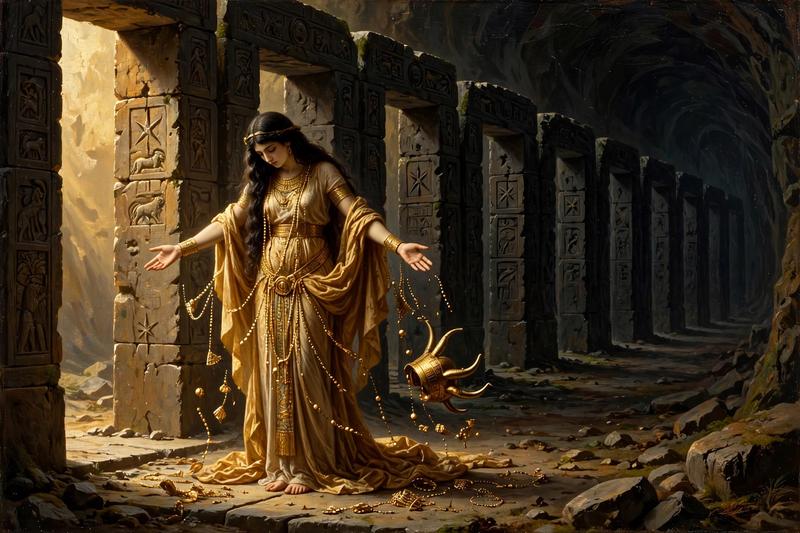
- Description with Source Text: In the Sumerian poem known as Inanna’s Descent to the Underworld, the goddess Inanna journeys to the realm of her sister Ereshkigal, and at each of the seven gates she must remove one garment or emblem of her power until she stands naked before the throne of death. She is struck down and hung on a hook, then revived by the god Enki’s creatures and restored to life.
- One Guiding Principle: Before renewal, every adornment must be surrendered; the soul must meet the deep stripped of all its titles.
- Sign Hand Movement: Hands raised with palms facing outward, then lowered open and empty, symbolizing the release of all that is carried.
- Token Arm Movement and Body Movement: Standing, arms unfolding downward and outward as though letting robes fall, then bowing the head in humility.
- Metaphysical Epiphany: Realizing that the power stripped away in the descent was never the true self, and that what rises is simpler and truer.
- The Proclamation: “I commit to surrender what must be surrendered, and to rise unadorned and true.”
- Two or Three Witnesses: Ereshkigal, who receives the stripped goddess in her realm; Persephone, who likewise descended and returned; and Geshtinanna, who pleaded for her brother Dumuzi and shared the descent’s burden.
6. Ereshkigal
- Name of the Covenant: The Covenant of the Shadow Honored
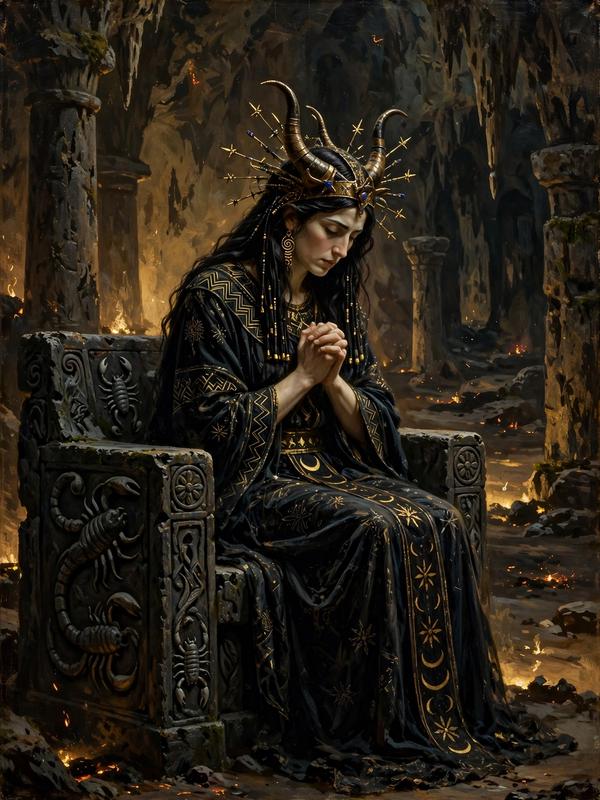
- Description with Source Text: In Sumerian and Mesopotamian tradition, Ereshkigal is queen of Irkalla, the land of the dead — the elder sister of Inanna, the only one who could pass judgment and give laws in her kingdom. In the Descent of Inanna she rules the realm of the dead with absolute law, receiving the stripped goddess into the final reckoning.
- One Guiding Principle: The shadow and the ending are sacred; death is not the enemy of life but its final teacher and judge.
- Sign Hand Movement: Both hands brought together over the solar plexus, pressed flat, symbolizing the inward kingdom.
- Token Arm Movement and Body Movement: A slow, deliberate bow to the ground, forehead near the earth, acknowledging what lies beneath.
- Metaphysical Epiphany: Realizing that the dark is not empty but a kingdom with its own law, and that honoring endings gives depth to every beginning.
- The Proclamation: “I commit to honor the shadow, the ending, and the deep — and to meet them with reverence rather than fear.”
- Two or Three Witnesses: Inanna, whose descent revealed the shadow’s throne; Persephone, who learned to rule the underworld alongside her descent; and the Cailleach, the winter hag who holds the cold season in her own right.
7. Selu
- Name of the Covenant: The Covenant of the Giving Body
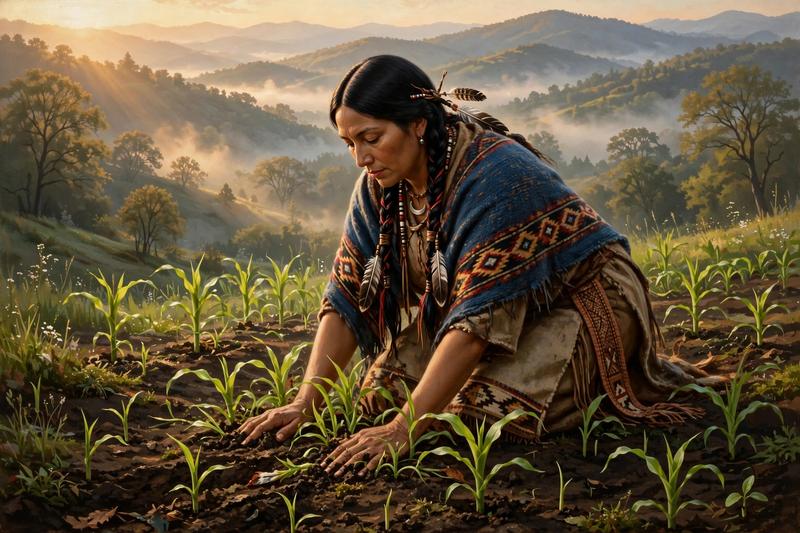
- Description with Source Text: In Cherokee tradition, Selu — whose name means “corn” — is the First Woman and Corn Mother, wife of Kanati the Lucky Hunter. When her sons discovered she created corn from her own body and accused her of witchcraft, she gave them instructions with her dying breath: to drag her body across the cleared ground so that corn would spring wherever her blood fell, feeding the people forever.
- One Guiding Principle: The gift that truly feeds is given from one’s own substance; the body itself is the first offering.
- Sign Hand Movement: Right hand laid flat across the belly, then opened outward toward the earth, symbolizing giving from within.
- Token Arm Movement and Body Movement: Kneeling and pressing both palms into the soil, then scattering them outward as though sowing seed.
- Metaphysical Epiphany: Realizing that the earth’s food is her own body given freely, and that every meal is a sacrament of this sacrifice.
- The Proclamation: “I commit to give from my own substance for the nourishment of others, as the Corn Mother gave.”
- Two or Three Witnesses: Kanati, her husband, the First Hunter who learned the law of the hunt beside her giving; Demeter, the grain goddess of another land; and the Hopi Corn Maidens, who likewise embody the sacred gift of corn.
8. Kanati
- Name of the Covenant: The Covenant of the Respectful Hunt
- Description with Source Text: In Cherokee tradition, Kanati — “The Lucky Hunter,” the First Man — lived with his wife Selu and was the source of all game. In the telling of Myths of the Cherokee, the animals grew angry at his taking and held a council; thereafter hunters must ask the animals’ pardon and follow sacred laws, or the game would be withheld.
- One Guiding Principle: What is taken from the wild must be taken with reverence, gratitude, and law — never wantonly.
- Sign Hand Movement: Right hand raised to the brow as though scanning the horizon, then lowered to the heart.
- Token Arm Movement and Body Movement: A slow turn in a full circle with one arm extended, acknowledging the four directions of the hunting ground.
- Metaphysical Epiphany: Realizing that the hunter is a guest in the animal’s world, and that every taking must be balanced by respect and restraint.
- The Proclamation: “I commit to take only what I need, with gratitude and reverence for the life I take.”
- Two or Three Witnesses: Selu, his wife, whose giving set the measure of his taking; Cernunnos, the horned lord of wild beasts; and Artemis, the Greek huntress who punishes those who hunt without reverence.
9. Cernunnos
- Name of the Covenant: The Covenant of the Wild Kinship
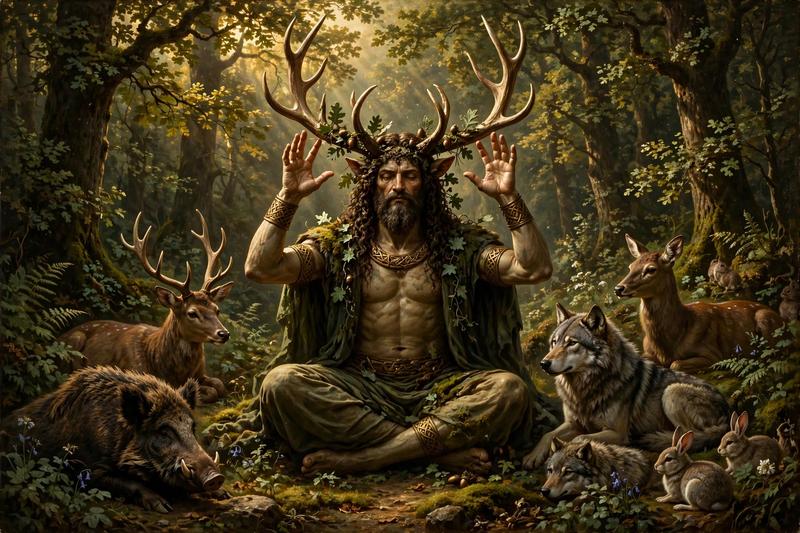
- Description with Source Text: Cernunnos, the horned god of Celtic tradition, is best known from the Gundestrup cauldron, where he sits cross-legged among wild beasts wearing a great antlered headdress. He is the lord of animals, of the forest depths, and of the untamed vitality that runs beneath the cultivated world.
- One Guiding Principle: The wild is not chaos but kinship; the human soul remains part of the animal world and must honor its wild brothers and sisters.
- Sign Hand Movement: Hands raised to either side of the head with fingers spread wide like antlers.
- Token Arm Movement and Body Movement: Crouching low to the ground, then rising with arms spread like the branching of great antlers.
- Metaphysical Epiphany: Realizing that the wild animal within is not the enemy of the spirit but its oldest companion.
- The Proclamation: “I commit to honor the wild — in the forest, in the animals, and in my own untamed heart.”
- Two or Three Witnesses: Pan, the Greek god of the wild places and flocks; Artemis, mistress of the beasts; and Kanati, the First Hunter who walked the wild as kin.
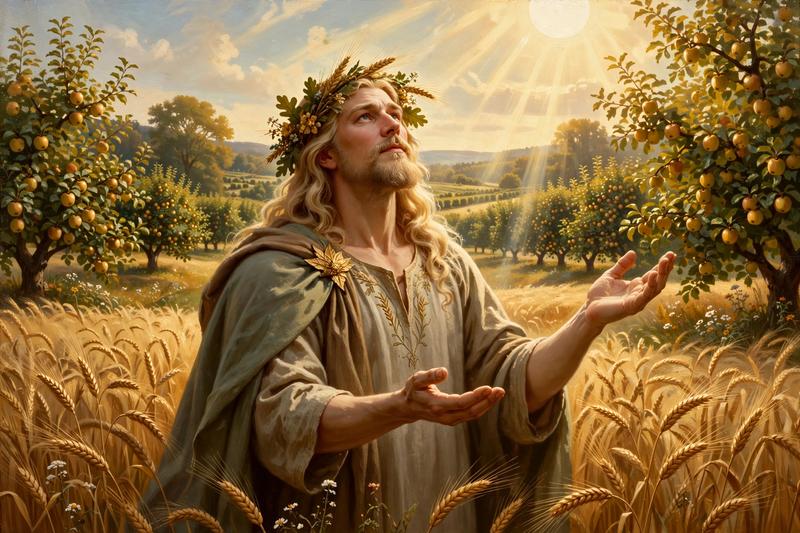
10. Freyr
- Name of the Covenant: The Covenant of Fruitful Peace
- Description with Source Text: In Norse tradition, Freyr (also called Frey) is the god of fertility, sunshine, and fair weather, lord of the harvest and of peace. In the Poetic Edda he gives up his sword for the love of the giantess Gerðr — and in Norse belief, his gift is abundance given in exchange for what is held most dear.
- One Guiding Principle: True abundance comes not from conquest but from surrender; the fruitful land rewards the open hand.
- Sign Hand Movement: Both hands cupped upward together, held low as though receiving rain.
- Token Arm Movement and Body Movement: Arms swept upward and outward from the heart toward the sky, as though lifting the sun.
- Metaphysical Epiphany: Realizing that peace and plenty grow from the same root, and that what is released in love returns as harvest.
- The Proclamation: “I commit to choose the fruitful peace over the drawn sword, and to trust the open hand.”
- Two or Three Witnesses: Brigid, who likewise joins fire and healing; Demeter, whose grain is his harvest under another name; and Gaia, whose body bears the fruit he blesses.
11. John Muir
- Name of the Covenant: The Covenant of the Wild Sanctuary
- Description with Source Text: John Muir (1838–1914), the Scottish-American naturalist, wanderer of the Sierra Nevada, and founder of the Sierra Club, devoted his life to the defense of wild places. His writings on Yosemite and the American wilderness taught that wild nature has value in itself — not merely as a resource for human use — and his advocacy led to the protection of Yosemite and the founding of the national park idea.
- One Guiding Principle: Wild places are sanctuaries with worth beyond all use; to walk in them attentively is itself a spiritual practice.
- Sign Hand Movement: Hand laid gently over the heart, then opened outward toward the horizon.
- Token Arm Movement and Body Movement: Standing still with eyes lifted and arms resting open at the sides, the posture of beholding.
- Metaphysical Epiphany: Realizing that the mountain and the forest need nothing from us, and that their grandeur is a gift that asks only to be seen.
- The Proclamation: “I commit to defend the wild places and to enter them as a pilgrim, not a conqueror.”
- Two or Three Witnesses: Aldo Leopold, who carried the same teaching into the science of ecology; Cernunnos, the ancient lord of the wild Muir loved; and Pan, whose wild places Muir walked in reverence.
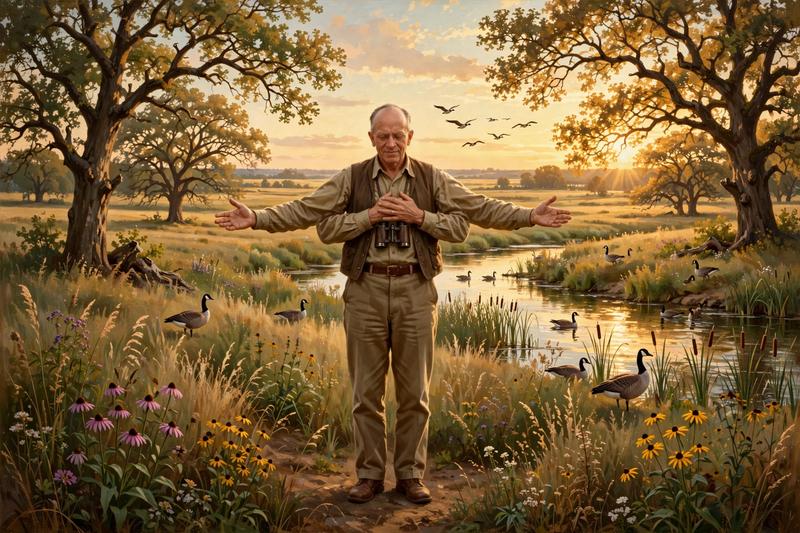
12. Aldo Leopold
- Name of the Covenant: The Covenant of the Land Community
- Description with Source Text: Aldo Leopold (1887–1948), forester and philosopher, set out his teaching in A Sand County Almanac, published after his death. His “land ethic” holds that the moral community must be enlarged to include soils, waters, plants, and animals — collectively, the land — and that humanity’s role must change from conqueror of the land-community to plain member and citizen of it.
- One Guiding Principle: We are members and citizens of the land community, not its conquerors; right action preserves the integrity, stability, and beauty of that community.
- Sign Hand Movement: Right hand placed flat over the left shoulder, then moved down across the chest to the opposite side — tracing the circle of community.
- Token Arm Movement and Body Movement: Both arms drawn in a wide circle around the body, as though embracing the land itself, ending with hands at rest over the heart.
- Metaphysical Epiphany: Realizing that the soil, the water, the plants, and the animals are fellow members of one community, and that belonging carries obligation.
- The Proclamation: “I commit to live as a member and citizen of the land community, honoring its integrity, stability, and beauty.”
- Two or Three Witnesses: John Muir, whose defense of the wild prepared the way; Gaia, the living Earth that Leopold’s land ethic describes; and Selu, the Corn Mother, whose body is the land’s gift made flesh.
Figures