Signs, Tokens & Covenants — The Harmonic Way
The order of Chinese wisdom traditions, Tao-centered. Figures are drawn only from the Taoist and Chinese-wisdom canon: the Tao Te Ching, the Zhuangzi, the Liezi, and the lineage of Taoist masters and sages.
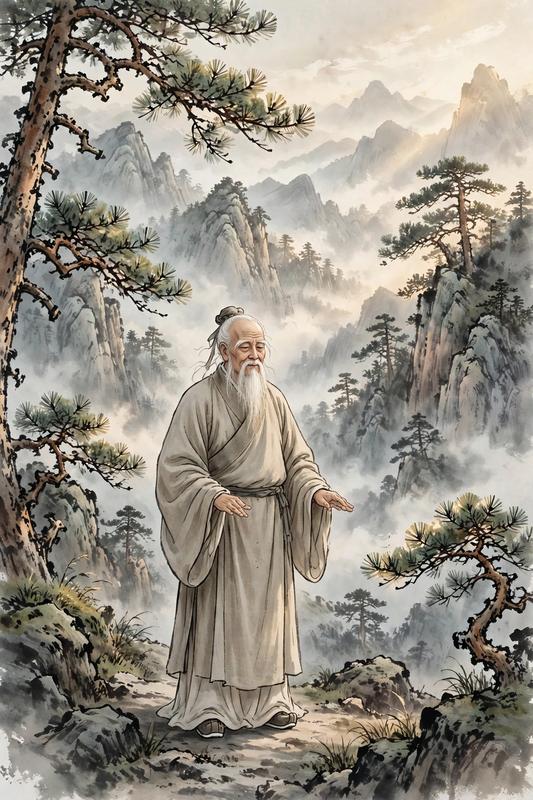
1. Laozi (Lao Tzu, 老子)
- Name of the Covenant: The Covenant of Simplicity
- Description with Source Text: Laozi, the Old Master, is traditionally named as the author of the Tao Te Ching, the short classic of some eighty-one brief chapters composed around the fourth or third century BCE. The Tao Te Ching teaches that the Way (Tao) gives rise to all things yet claims nothing, and that the sage governs by lessening desire, honoring plainness, and never contending.
- One Teaching: Embrace the uncarved block — value plainness, reduce desire, and accomplish what matters by not contending with it.
- Sign Hand Movement: Both hands held flat, palms facing down and outward at waist level, then slowly lowered, as if smoothing and settling everything into plainness.
- Token Arm Movement and Body Movement: Standing upright, arms hang relaxed at the sides while the body inclines very slightly forward, as a bow of yielding; then returning to stillness.
- Metaphysical Epiphany: Realizing that the Way is not seized but received, and that power increases as the self lessens.
- The Proclamation: “I commit to walk in simplicity, contending with no one and claiming nothing.”
- Two or Three Witnesses: Liezi, who rode the wind because he sought nothing of it; Xu You, who refused the throne to keep his simplicity; Nan Guo Ziqi, who emptied himself until he could hear the piping of heaven.
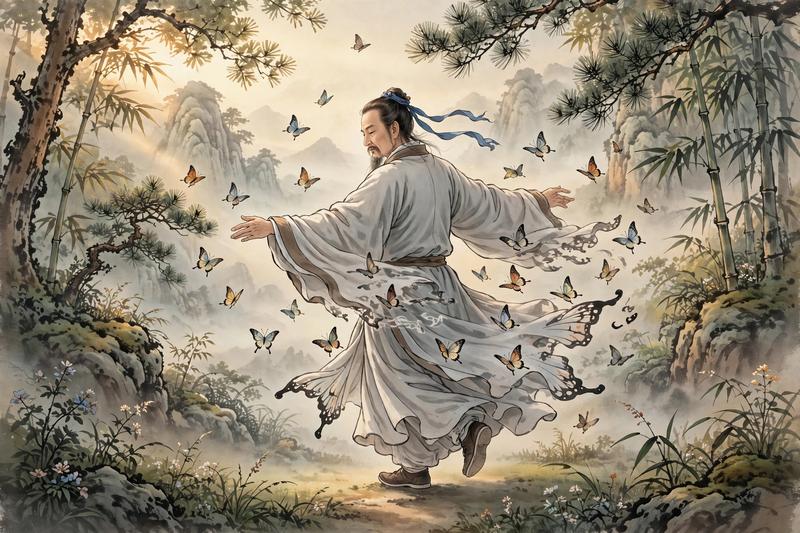
2. Zhuangzi (Chuang Tzu, 莊子)
- Name of the Covenant: The Covenant of Transformation
- Description with Source Text: Zhuangzi (c. 369–286 BCE), a philosopher of the state of Song, left the Zhuangzi, a text of stories, dialogues, and parables written by him and his followers. In its famous butterfly passage he wakes from dreaming he was a butterfly and cannot tell whether he is a man dreaming he was a butterfly or a butterfly dreaming he is a man — showing that every identity and boundary is open to transformation.
- One Teaching: Do not cling to any fixed form or name; transformation is the only constant, and freedom belongs to those who can change.
- Sign Hand Movement: Fingers loosely interlaced at the chest, then released and fluttered apart like a butterfly’s wings, symbolizing the release of fixed identity.
- Token Arm Movement and Body Movement: Turning slowly in place with arms extended at shoulder height, completing one full circle, embodying wandering freely through change.
- Metaphysical Epiphany: Realizing that self and other, waking and dreaming, are not hard walls but breath passing through the one great bellows of heaven.
- The Proclamation: “I commit to remain open to transformation and to let no fixed name confine me.”
- Two or Three Witnesses: Laozi, who called the Way empty yet inexhaustible; Liezi, who let his body be carried wherever the wind turned; Cook Ding, whose knife never dulled because he followed the natural lines of change.
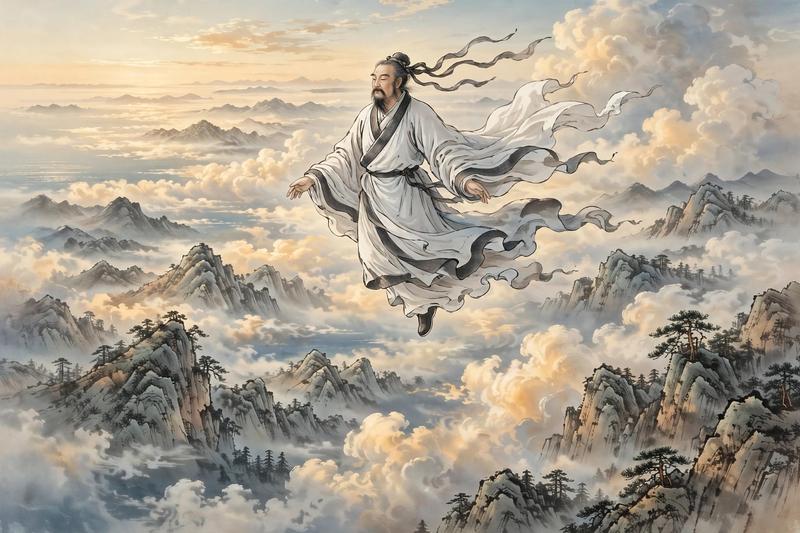
3. Liezi (Lieh Tzu, 列子)
- Name of the Covenant: The Covenant of Effortless Abiding
- Description with Source Text: Liezi (Lie Yukou) appears in the Zhuangzi as a master who learned to ride upon the wind and travel where he pleased without effort; the Liezi, the book bearing his name, was given its received eight-chapter form in the fourth century CE (the commentary of Zhang Zhan) and belongs to the same wandering, free-spirited lineage as the Zhuangzi. His teaching is that the sage is carried along by the way things are, needing no force, because his spirit rests in what is beyond effort and beyond striving.
- One Teaching: Rest your spirit in non-action: when nothing is grasped and nothing is forced, all things carry you.
- Sign Hand Movement: Both palms raised slowly upward and opened, as if catching a breeze, then held still and weightless.
- Token Arm Movement and Body Movement: Arms extended lightly at the sides, body swaying gently as though lifted and guided by wind, with no stepping, only drifting.
- Metaphysical Epiphany: Realizing that striving against the current only deepens exhaustion, while yielding lets the whole world do the lifting.
- The Proclamation: “I commit to cease striving against the current and to be carried by the way things are.”
- Two or Three Witnesses: Zhuangzi, who praised those who wander free and easy; Huzi the master who received the sage without disturbance; Woodcarver Qing, who worked only when his spirit was at rest.
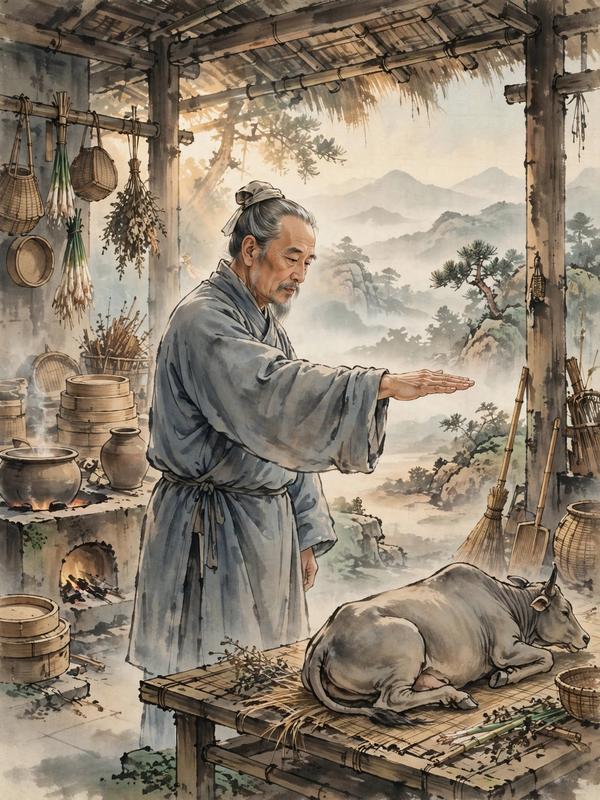
4. Cook Ding (庖丁, Pao Ding)
- Name of the Covenant: The Covenant of Unforced Skill
- Description with Source Text: Cook Ding, the cook of Lord Wenhui, appears in chapter three of the Zhuangzi, the chapter on nurturing life. When praised for his skill with the knife, he explains that after years of practice he no longer sees the whole ox but only the natural seams and hollows, and his blade slips through the joints as if there were nothing to cut — so that in nineteen years he has changed his knife only once, because it has never met resistance.
- One Teaching: Attend to the natural pattern within things; skill perfected becomes effortless, and the tool never dulls when it never forces.
- Sign Hand Movement: One hand held flat like a blade, gliding slowly and precisely through the air, never jerking, never pressing — symbolizing movement that follows the natural seams.
- Token Arm Movement and Body Movement: Standing beside an imagined work surface, one hand steadying and the other tracing a single smooth, continuous line through space, then pausing in complete stillness with hands lowered.
- Metaphysical Epiphany: Realizing that struggle comes from fighting the grain of things, and that mastery is simply obedience to what is already there.
- The Proclamation: “I commit to follow the natural seams of every task and never to force what does not give.”
- Two or Three Witnesses: Liezi, who rode the wind by never opposing it; Woodcarver Qing, who carved by listening to the wood; Sun Simiao, whose hand served the patterns of the body rather than his own will.
5. Woodcarver Qing (梓慶)
- Name of the Covenant: The Covenant of Listening Craft
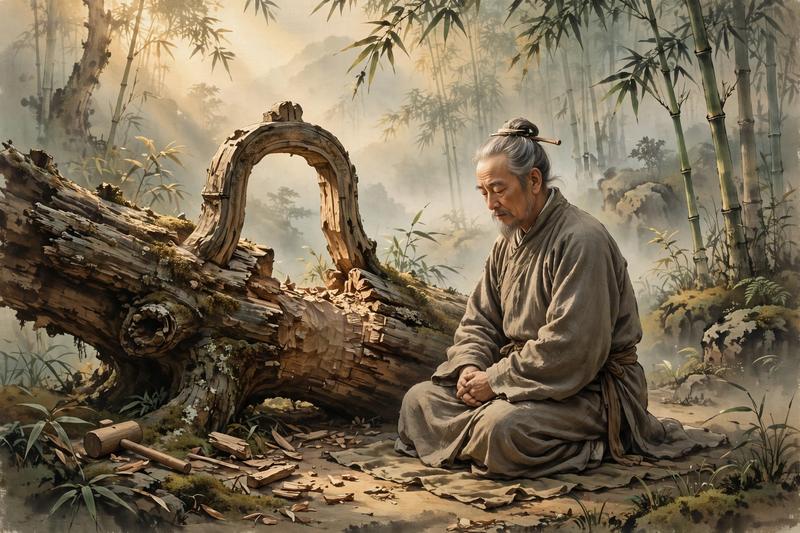
- Description with Source Text: Woodcarver Qing (Qing the carpenter) appears in chapter nineteen of the Zhuangzi, the chapter on attaining life. Commissioned to carve a bell stand, he fasts for seven days to forget reward, rank, and even his own limbs — until, he says, he enters the forest, sees the wood in its completed form, and sets his hand to work, so that all who see the finished bell stand call it the work of spirits.
- One Teaching: Forget the self — reward, reputation, even the body — before beginning; then the work forms itself through your emptied hands.
- Sign Hand Movement: Both hands placed over the ears, then drawn gently away and opened outward, symbolizing first listening, then release into silence.
- Token Arm Movement and Body Movement: Kneeling, hands folded motionless in the lap for a long stillness; then rising with both hands raised slowly as if revealing a completed form already present in the wood.
- Metaphysical Epiphany: Realizing that the work is not made by the self but found by it — the form waits within the material, and the carver’s task is only to become quiet enough to see it.
- The Proclamation: “I commit to fast from ambition before I work, and to let the work reveal itself through me.”
- Two or Three Witnesses: Nan Guo Ziqi, who sat and forgot himself until only the piping of heaven remained; Cook Ding, whose knife found the joints because his mind was not in the way; Ge Hong, who tended his furnace for years in patient obscurity.
6. Nan Guo Ziqi (南郭子綦)
- Name of the Covenant: The Covenant of the Empty Self
- Description with Source Text: Nan Guo Ziqi opens chapter two of the Zhuangzi, the discussion on evening out all things. He sits leaning on his armrest, breathing softly, and tells his friend Yan Chengzicai that he has lost himself — that his body has become like withered wood and his mind like dead ashes. From that emptiness he teaches the three kinds of piping: the piping of men, of earth, and of heaven — and that heaven’s piping is what blows through each thing making it what it is.
- One Teaching: Lose the self: when the small mind falls silent, heaven’s music can be heard moving through all things.
- Sign Hand Movement: One hand slowly closing over the heart, then opening outward and releasing, as if letting the self slip away.
- Token Arm Movement and Body Movement: Sitting, the whole body grows utterly still — shoulders dropped, head slightly bowed, arms resting — held in a long, deliberate stillness that is itself the movement.
- Metaphysical Epiphany: Realizing that the self is a reed, not the music; the music of heaven passes through whoever is empty enough to carry it.
- The Proclamation: “I commit to grow still until the self is lost and only what is true remains.”
- Two or Three Witnesses: Laozi, who praised the sage for becoming like a valley that receives all streams; Woodcarver Qing, who forgot his limbs before he carved; Zhang Daoling, who required the confession and emptying of every wrong before healing could come.
7. Xu You (許由)
- Name of the Covenant: The Covenant of Refusing the Crown
- Description with Source Text: Xu You, a hermit of antiquity, appears in chapter one of the Zhuangzi, the chapter on free and easy wandering. When the sage-king Yao offered him the throne of the empire, Xu You refused it — and when told that the offer still stood, he went and washed his ears in the Ying River to cleanse them of the taint of such an offer, saying he would rather wander free than be yoked to rule.
- One Teaching: The highest freedom is the freedom to refuse power; do not trade your wandering for a throne.
- Sign Hand Movement: One hand raised in a gentle but firm warding gesture — palm outward, fingers together — the dignified refusal.
- Token Arm Movement and Body Movement: One step backward, turning away with head held upright, then walking two slow steps aside, as one who declines the yoke and takes the open path instead.
- Metaphysical Epiphany: Realizing that to accept what the world calls great is to accept its chains, and that the unfilled vessel is larger than any filled one.
- The Proclamation: “I commit to refuse every crown that would bind my wandering, and to keep myself unyoked.”
- Two or Three Witnesses: Laozi, who warned that to accept the great is to bear the great’s burdens; Liezi, who lived on no king’s salary and rode the wind instead; Sun Simiao, who turned aside from imperial summons to serve the suffering.
8. The Yellow Emperor (黃帝, Huangdi)
- Name of the Covenant: The Covenant of Yielding Rule
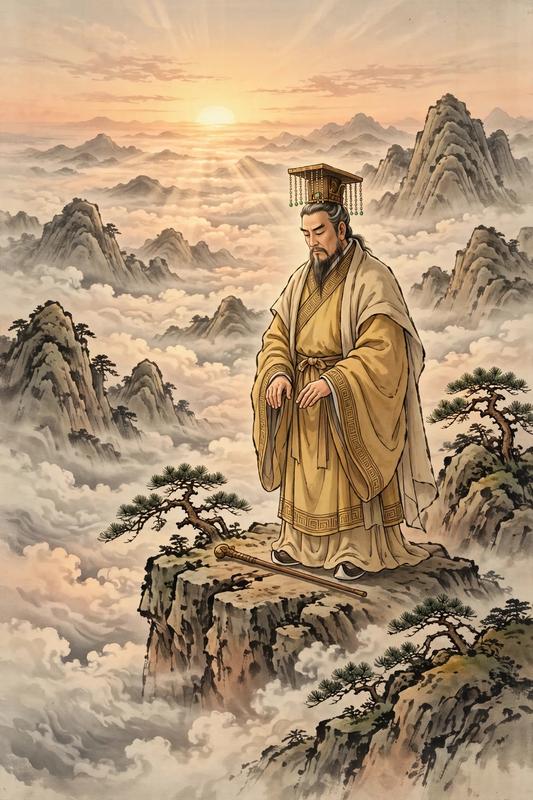
- Description with Source Text: The Yellow Emperor, the legendary sovereign at the fountainhead of Chinese civilization, appears in chapter eleven of the Zhuangzi, where he travels to the sacred mountain to question Guangchengzi the Perfected One, and is taught that the key to ruling is to hide the world within the world — to guard what is within and let all things settle of themselves. He is also the patron of the inner-alchemy tradition, the figure in whose name the great medical and cultivation classics speak.
- One Teaching: The best ruler does not steer; by guarding his own stillness, he lets the whole world come to order by itself.
- Sign Hand Movement: Both hands lowered together, palms down, in a slow descending gesture — the laying down of the scepter, the settling of all rule into stillness.
- Token Arm Movement and Body Movement: Standing tall, the body turns slowly a quarter-turn and the arms open wide at the sides, then fold inward to rest at the waist — authority opening outward to embrace all, then resting within.
- Metaphysical Epiphany: Realizing that order is not imposed but allowed; the one who governs least governs best, because heaven already orders what men only disturb.
- The Proclamation: “I commit to rule by stillness, letting all things find their own order without my forcing.”
- Two or Three Witnesses: Laozi, who said the sage does not act and nothing is left undone; Ge Hong, who taught the cultivation of life through inward guarding; Zhang Daoling, whose covenant ordered a people by moral bond rather than by force of arms.
9. Zhang Daoling (張道陵)
- Name of the Covenant: The Covenant of the Sacred Bond
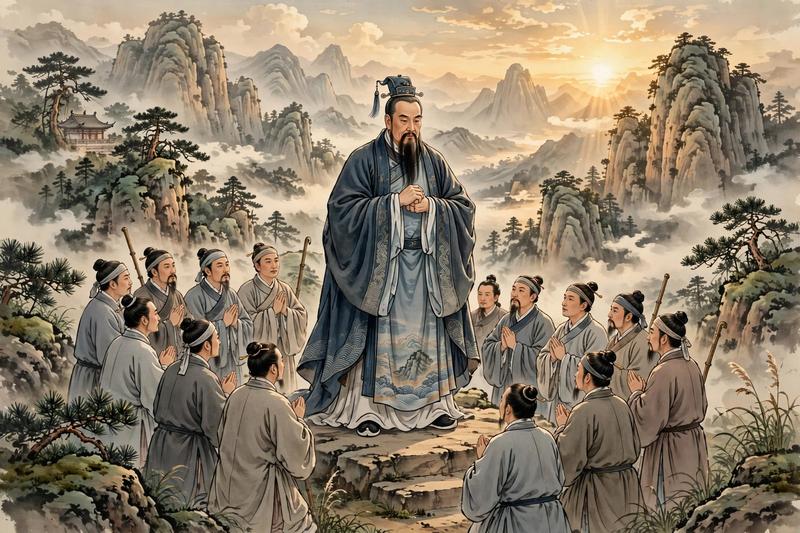
- Description with Source Text: Zhang Daoling (traditionally dated 34–156 CE) founded the Way of the Celestial Masters in Sichuan during the Eastern Han dynasty — the first organized Taoist church, whose name comes from the covenant (meng, 盟) of orthodox and unified authority sworn by its leaders. He taught that illness came from moral failing and healed the sick by having them write down and confess their wrongs in the three heavens, binding his community together by covenant rather than by force.
- One Teaching: A community is held by sacred bond, not by law: bind yourself by covenant, confess what is wrong, and the body and the people are made whole together.
- Sign Hand Movement: The right hand pressed firmly over the left fist — an ancient gesture of sworn pledge — held briefly at the chest.
- Token Arm Movement and Body Movement: Both arms brought together and crossed over the chest in a binding embrace, then opened outward toward the assembled community, as a bond sealed and then extended.
- Metaphysical Epiphany: Realizing that confession empties the hidden wrong and covenant fills the emptied place with trust — and that healing and belonging are one act.
- The Proclamation: “I commit to bind myself by sacred covenant, confessing what is wrong so that healing may come to me and to my people.”
- Two or Three Witnesses: Nan Guo Ziqi, whose emptying made room for heaven’s piping; Ge Hong, who passed down the Master’s lineage of inner cultivation; Sun Simiao, whose ethics bound every physician by oath to treat all alike.
10. Ge Hong (葛洪)
- Name of the Covenant: The Covenant of Nurturing Life
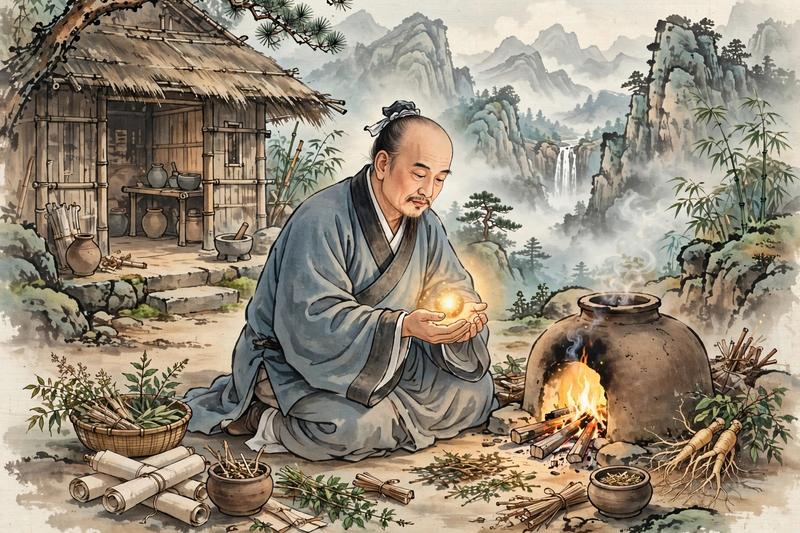
- Description with Source Text: Ge Hong (283–343 CE), styled Baopuzi — the Master Who Embraces Simplicity — was a scholar, alchemist, and Taoist adept of the Eastern Jin dynasty, author of the Baopuzi (Master Embracing Simplicity), the great two-part treatise on inner cultivation and the elixir. He spent his later years on Mount Luofu tending his alchemical furnace, teaching that human life can be extended and transformed by the disciplined nurturing of one’s inborn nature, breath, and essence.
- One Teaching: Tend the inborn nature as a gardener tends a living thing: through patient cultivation, breath, and simplicity, life itself may be transformed.
- Sign Hand Movement: Both hands cupped together gently before the lower belly, as if cradling something small and alive — the careful holding of one’s own vital essence.
- Token Arm Movement and Body Movement: Slowly rising from a crouch to standing, arms gathering inward toward the body like drawing up water or sunlight, then settling the gathered hands low at the center of the body.
- Metaphysical Epiphany: Realizing that life is not consumed but cultivated — that what is tended with constancy grows, and that the self is the first garden.
- The Proclamation: “I commit to nurture my inborn nature with patience, simplicity, and steadiness of breath.”
- Two or Three Witnesses: Laozi, who taught that the soft and weak overcome the hard and strong; Cook Ding, who preserved his knife for nineteen years by never wasting its edge; Sun Simiao, who made the preservation of life his holy work.
11. Sun Simiao (孫思邈)
- Name of the Covenant: The Covenant of the Healer’s Heart
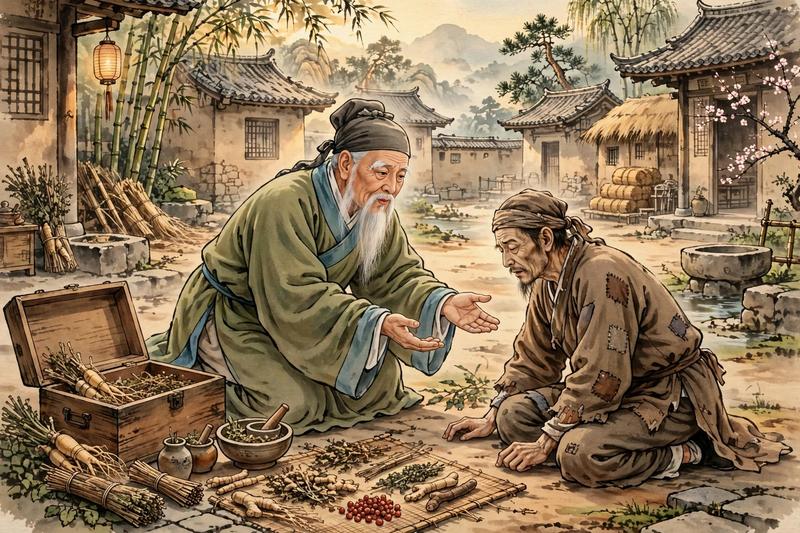
- Description with Source Text: Sun Simiao (traditionally dated 581–682 CE) was the great physician of the Tang dynasty, honored as the King of Medicine (藥王) and steeped in Taoist cultivation. His Essential Prescriptions Worth a Thousand Gold (千金要方) gathers some five thousand remedies, and its opening chapter — On the Absolute Sincerity of Great Physicians — commands the physician to treat noble and base, rich and poor, friend and enemy alike, as if they were his own close kin, guided first of all by great compassion.
- One Teaching: Let great compassion come before all skill: meet every sufferer on equal ground, as you would your own beloved kin.
- Sign Hand Movement: Both hands crossed gently over the heart, then opened outward toward the suffering — the compassion first gathered, then given.
- Token Arm Movement and Body Movement: Kneeling, leaning forward with arms extended low and palms up, as one offering care without regard to rank — then rising with hands lifted as if carrying the restored one upright.
- Metaphysical Epiphany: Realizing that all distinctions of rank, wealth, and enmity are dust before the equal preciousness of life, and that the healer’s craft is compassion wearing the hands of skill.
- The Proclamation: “I commit to let great compassion govern my craft, treating every sufferer as my own kin.”
- Two or Three Witnesses: Ge Hong, who first recorded remedies for the afflicted of his own age; Zhang Daoling, who made the sick whole by moral confession and care; Laozi, who taught that heaven and earth treat all things without favoritism.
Figures