
Signs, Tokens & Covenants — The Order of Living Promise
Each entry names a covenant drawn from the Jewish tradition — Tanakh, prayer, and established Jewish commentary — with a sign, a token, an epiphany, a proclamation, and witnesses from within the same tradition.
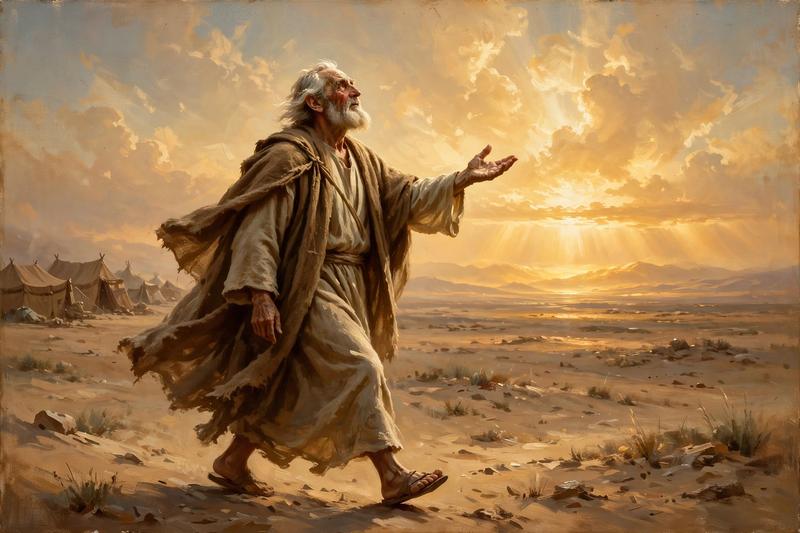
1. Abraham
- Name of the Covenant: The Covenant of the Journey
- Description with Source Text: In Genesis 12 Abram is called to leave his father’s house for a land he has not seen, and he goes; in Genesis 15 and 17 God seals the promise of descendants and land, changing his name to Abraham, father of a multitude. His trust is tested to its limit in Genesis 22, in the binding of Isaac, and Jewish commentary reads his whole life as faith proven through obedient action.
- One Teaching: Faith is not only believed but walked — trust in God is proven by obedient steps into the unknown.
- Sign Hand Movement: Right hand extended forward, palm open and facing upward, as one offering the next step to God.
- Token Arm Movement and Body Movement: Take one deliberate step forward with the arm extended toward the horizon, embodying the going-forth.
- Metaphysical Epiphany: Realizing that the promise is not reached by standing still but by moving in trust before the way is clear.
- The Proclamation: “I commit to walk forward in trust, even when the destination is not yet shown to me.”
- Two or Three Witnesses: Jacob, whose night journeys carried the same promise onward; Joshua, who led the people across into the promised land; and Ruth, who left her homeland to walk toward a God she had only heard of.

2. Sarah
- Name of the Covenant: The Covenant of Laughter
- Description with Source Text: In Genesis 17 her name is changed from Sarai to Sarah, with the promise that she will be a mother of nations; in Genesis 18 she laughs at the promise of a son in her old age, and in Genesis 21 the promised child Isaac — whose name carries the sense of laughter — is born. Jewish commentary reads her laughter as the honest human response to an impossible promise that God then fulfills.
- One Teaching: Hope is permitted even when it seems absurd — God’s promise is not cancelled by human impossibility.
- Sign Hand Movement: Hands cupped together before the chest, as if cradling something precious and long-awaited.
- Token Arm Movement and Body Movement: Lift the cupped hands gently upward while raising the face, embodying received joy.
- Metaphysical Epiphany: Realizing that laughter at the impossible can turn into laughter of fulfillment, and both belong in prayer.
- The Proclamation: “I commit to keep hoping for the promised good, even when reason says it cannot come.”
- Two or Three Witnesses: Hannah, who prayed through barrenness until Samuel was born; Rachel, who waited long years for Joseph; and the Shunammite woman of 2 Kings 4, to whom the prophet Elisha promised a son.

3. Moses
- Name of the Covenant: The Covenant of Liberation
- Description with Source Text: In Exodus 3 Moses meets God at the burning bush and is sent to bring Israel out of Egypt; in Exodus 14 he stretches out his hand and the people pass through the sea; in Exodus 19–20 he ascends Sinai and receives the Torah. Numbers 12 describes him as the humblest of people, and again and again he intercedes for Israel after their failures.
- One Teaching: True leadership is humble service — the liberator stands between God and the people, never above them.
- Sign Hand Movement: Right hand raised with palm facing outward, as one parting waters or holding back harm from others.
- Token Arm Movement and Body Movement: Sweep both arms outward and apart, then step forward through the opened space, embodying passage from bondage to freedom.
- Metaphysical Epiphany: Realizing that freedom is not seized but received — the sea parts for those who walk forward in trust.
- The Proclamation: “I commit to use whatever strength I am given to set others free, never to hold them down.”
- Two or Three Witnesses: Joshua, who completed the entry into the land; Deborah, who delivered Israel from Canaanite oppression; and Esther, who risked herself to save her people from destruction.
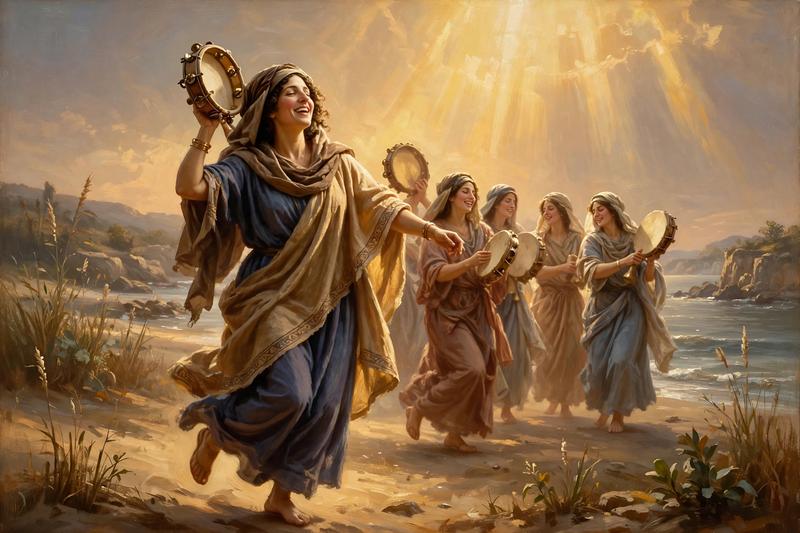
4. Miriam
- Name of the Covenant: The Covenant of the Song
- Description with Source Text: In Exodus 15, after the crossing of the sea, Miriam the prophetess takes up a timbrel and leads the women in song and dance, answering the song of Moses. Rabbinic tradition further teaches that a miraculous well accompanied Israel through the wilderness in Miriam’s merit (Babylonian Talmud — tradition, not the biblical text itself).
- One Teaching: Deliverance is not complete until it is sung — gratitude gives the final shape to redemption.
- Sign Hand Movement: Right hand lifted lightly beside the head, fingers together, as one raising a timbrel.
- Token Arm Movement and Body Movement: Take a small joyful step in place while the raised hand moves in a gentle circling rhythm, embodying the dance of the redeemed.
- Metaphysical Epiphany: Realizing that joy expressed becomes joy multiplied — the song after the miracle is part of the miracle.
- The Proclamation: “I commit to answer every deliverance in my life with open gratitude and song.”
- Two or Three Witnesses: Deborah, whose victory song is preserved in Judges 5; Hannah, whose song in 1 Samuel 2 turns personal mercy into praise; and David, whose Psalms made song the prayer-book of Israel.

5. Deborah
- Name of the Covenant: The Covenant of Righteous Judgment
- Description with Source Text: Judges 4 presents Deborah as prophetess and judge, settling disputes beneath her palm tree in the hill country of Ephraim; she summons the commander Barak to confront the Canaanite general Sisera, and Judges 5 preserves her triumphant song, in which she names herself a mother in Israel. Her leadership brought the land forty years of peace.
- One Teaching: Wisdom must be willing to act — righteous judgment speaks the word and then goes with it into the field.
- Sign Hand Movement: Both hands held level before the chest, palms down, like the balanced pans of a scale.
- Token Arm Movement and Body Movement: Stand firmly planted and raise the right hand in a clear, decisive gesture, embodying judgment rendered without fear.
- Metaphysical Epiphany: Realizing that discernment without courage changes nothing — the word of God must be carried into the place of battle.
- The Proclamation: “I commit to judge fairly, speak truthfully, and stand with those I send into hard places.”
- Two or Three Witnesses: Moses, who judged the people from morning to evening; Samuel, prophet and judge over Israel; and Solomon, whose wisdom in judgment became proverbial in 1 Kings 3.
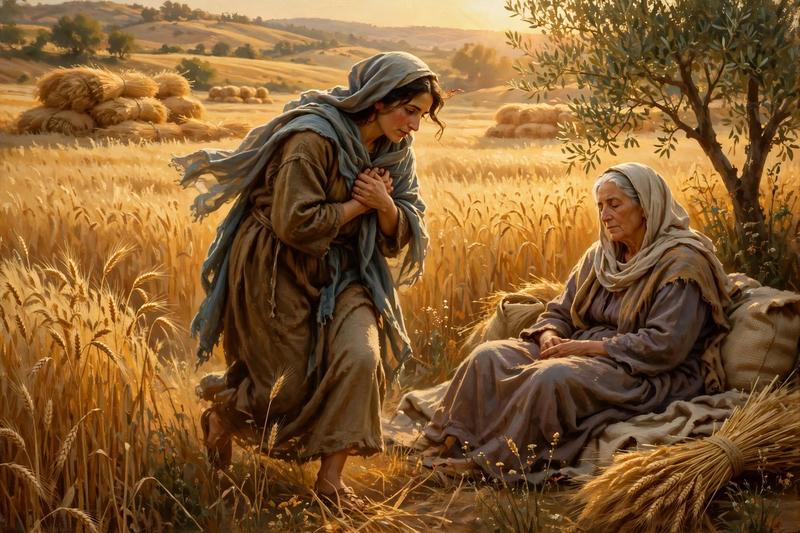
6. Ruth
- Name of the Covenant: The Covenant of Loving-Kindness (Hesed)
- Description with Source Text: The Book of Ruth tells of the Moabite widow who refuses to abandon her mother-in-law Naomi, gleans faithfully in the fields of Boaz, and is woven by loyalty into the people of Israel — the genealogy at the book’s close names her as the great-grandmother of King David. Jewish tradition counts her among the righteous converts and reads her story as the embodiment of hesed, steadfast loving-kindness.
- One Teaching: Loving-kindness shown to the vulnerable is never wasted — loyalty plants seeds that outlive the one who sows them.
- Sign Hand Movement: Hands gently clasped together at the chest, right over left, in the posture of holding to another.
- Token Arm Movement and Body Movement: Bow slightly forward with arms enfolding, as one gathering in the stranger and the bereaved.
- Metaphysical Epiphany: Realizing that the smallest faithful kindness can be the hinge on which a whole future turns.
- The Proclamation: “I commit to practice steadfast kindness, especially toward those who cannot repay it.”
- Two or Three Witnesses: Abraham, who ran to welcome strangers at Mamre in Genesis 18; Boaz, whose generosity to Ruth mirrored her own; and David, who showed kindness to Mephibosheth for Jonathan’s sake in 2 Samuel 9.
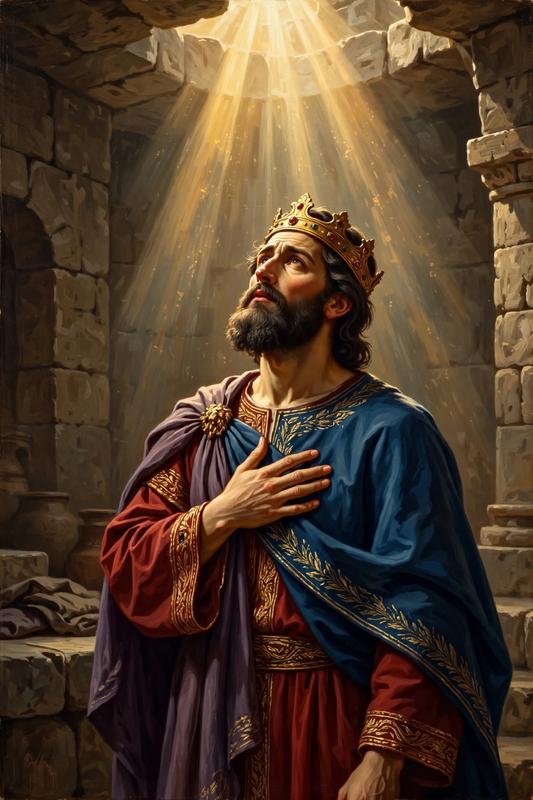
7. David
- Name of the Covenant: The Covenant of the Repentant Heart
- Description with Source Text: The shepherd boy anointed in 1 Samuel 16 becomes Israel’s king and receives the dynastic promise of 2 Samuel 7; yet after his sin involving Bathsheba and Uriah, confronted by the prophet Nathan in 2 Samuel 12, he confesses, and Psalm 51 preserves his prayer for a cleansed heart. Jewish tradition holds him as the model of teshuvah — return — teaching that no fall is final while repentance remains.
- One Teaching: The measure of a person is not the absence of failure but the honesty of return — a broken and contrite heart is never despised.
- Sign Hand Movement: Right hand placed flat over the heart, head slightly bowed, in the posture of contrition.
- Token Arm Movement and Body Movement: Bow low from the waist with the hand on the heart, then rise slowly upright, embodying fall and return.
- Metaphysical Epiphany: Realizing that the way back is always open — confession is the door through which mercy enters.
- The Proclamation: “I commit to face my failures honestly, make amends where I can, and begin again.”
- Two or Three Witnesses: Hezekiah, who turned his face to the wall in prayer and was granted more years in 2 Kings 20; Josiah, who tore his garments and repented on hearing the Torah in 2 Kings 22; and Manasseh of Judah, whose late repentance is recorded in 2 Chronicles 33.

8. Esther
- Name of the Covenant: The Covenant of Hidden Courage
- Description with Source Text: The Book of Esther tells of the orphaned Jewish girl raised by her cousin Mordecai who becomes queen of Persia; when Haman plots the destruction of the Jews, she calls for three days of fasting and approaches the king unsummoned — an act that could cost her life — and the people are saved. God’s name never appears in the book, and Jewish commentary reads it as the story of divine providence working behind the veil of history; the festival of Purim celebrates the deliverance.
- One Teaching: When God seems hidden, courage becomes the visible form of faith — act for others even when heaven is silent.
- Sign Hand Movement: Palms pressed together before the chest in the stillness of fasting and resolve, then opened slowly forward.
- Token Arm Movement and Body Movement: Take one deliberate step forward with chin lifted and shoulders steady, embodying the walk into the king’s court.
- Metaphysical Epiphany: Realizing that the hiddenness of God is not the absence of God — providence often wears the face of human courage.
- The Proclamation: “I commit to act with courage for others, even when I cannot see how it will end.”
- Two or Three Witnesses: Joseph, who rose to save many in the foreign court of Egypt; Daniel, who prayed openly in the courts of exile; and Mordecai, who refused to bow and set the deliverance in motion.

9. Hannah
- Name of the Covenant: The Covenant of the Poured-Out Heart
- Description with Source Text: In 1 Samuel 1, the childless Hannah prays in the sanctuary at Shiloh with only her lips moving and no voice heard — the passage the rabbis take as the model for the silent Amidah prayer — and vows to dedicate a son to God. Her prayer is answered with Samuel, whom she lends to the sanctuary, and 1 Samuel 2 preserves her song of praise. Jewish tradition honors her as the exemplar of sincere, personal prayer.
- One Teaching: Prayer is the soul pouring itself out before God — words whispered in anguish are heard as clearly as any anthem.
- Sign Hand Movement: Hands cupped open before the lips, then gently lowered toward the heart, as words poured from the mouth into the breast.
- Token Arm Movement and Body Movement: Bow the head and sway gently forward and back in the manner of heartfelt prayer, embodying the pouring-out.
- Metaphysical Epiphany: Realizing that prayer does not need an audience — the silent heart speaks, and God listens.
- The Proclamation: “I commit to bring my whole heart to prayer, honestly and without pretense.”
- Two or Three Witnesses: Rachel, whose long prayer for children was answered with Joseph; Hezekiah, who prayed through tears facing the wall; and Daniel, who knelt in prayer three times a day even under threat.

10. Isaiah
- Name of the Covenant: The Covenant of the Willing Voice
- Description with Source Text: In Isaiah 6 the prophet sees the Lord enthroned in the Temple, hears the call for a messenger, and answers with his willing offer of himself; throughout the book he denounces empty ritual and demands justice — in Isaiah 1 and 58 he teaches that true worship is to loose the bonds of wickedness and share bread with the hungry. Jewish tradition reveres him as the prophet of consolation, whose later chapters promise comfort to the exiles.
- One Teaching: Worship without justice is noise — the willing messenger speaks for the oppressed, not only for the sanctuary.
- Sign Hand Movement: Right hand raised beside the shoulder, palm open and forward, in the posture of one volunteering to be sent.
- Token Arm Movement and Body Movement: Step forward with the hand raised high, embodying the messenger going out with the word.
- Metaphysical Epiphany: Realizing that seeing God’s holiness rightly always ends in being sent — vision becomes mission.
- The Proclamation: “I commit to let what I have seen of the good make me a voice for justice.”
- Two or Three Witnesses: Jeremiah, who carried the word through scorn and suffering; Ezekiel, the watchman sent to warn; and Amos, the shepherd called to demand justice for the poor.
11. Jeremiah
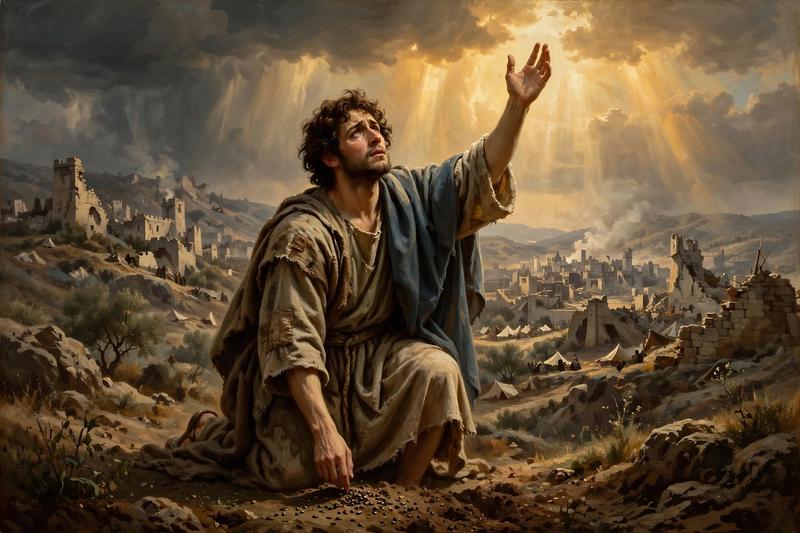
- Name of the Covenant: The Covenant of Hope in the Ruins
- Description with Source Text: Called as a youth in Jeremiah 1 and known as the weeping prophet, Jeremiah warned Jerusalem through its final siege; yet in Jeremiah 31 he proclaims a new covenant written on the heart, and in Jeremiah 32, with the city surrounded, he buys a field as a legal sign that houses and fields will again be bought in the land. Jewish tradition remembers him as the prophet who planted hope inside catastrophe.
- One Teaching: Hope is an act, not a feeling — buy the field while the siege is still on, and let the deed outlast the despair.
- Sign Hand Movement: Fingers of the right hand touching the earth before the body, then the hand rising open toward the sky.
- Token Arm Movement and Body Movement: Bend as if planting seed in the ground, then rise slowly to full height with arms lifting, embodying hope planted in ruins.
- Metaphysical Epiphany: Realizing that the future is built by present faithfulness — the field bought in siege becomes the proof of return.
- The Proclamation: “I commit to plant seeds of hope even when everything around me looks like ruin.”
- Two or Three Witnesses: Ezekiel, who saw dry bones live again in the valley; Ezra, who led the exiles home to rebuild; and Nehemiah, who raised the walls of Jerusalem from rubble.
12. Hillel the Elder
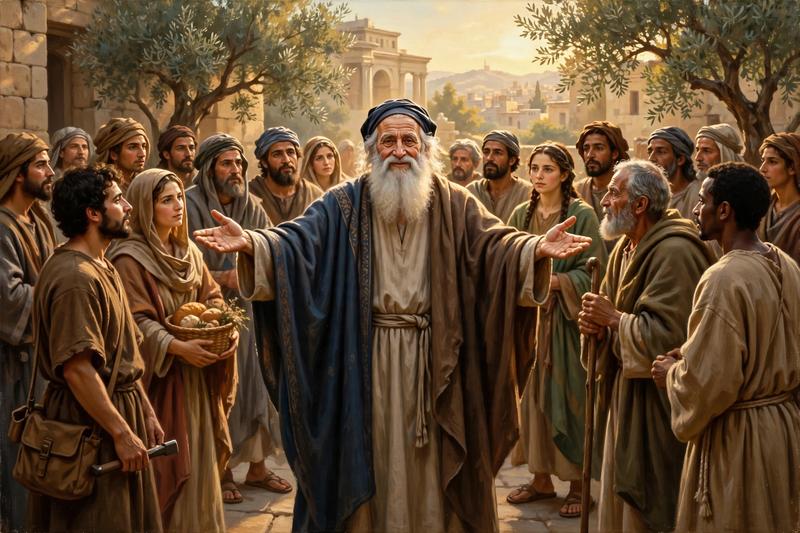
- Name of the Covenant: The Covenant of Loving Peace
- Description with Source Text: Hillel, the great sage of the late Second Temple period, is remembered in Pirkei Avot for his maxims on selfhood, responsibility, and timely action, and for urging his disciples to be like Aaron — loving peace, pursuing peace, loving people and drawing them near to Torah. The Babylonian Talmud (Shabbat 31a) records his summary of the whole Torah for a would-be convert: the teaching not to do to others what is hateful to oneself, with all the rest as commentary.
- One Teaching: Love of neighbor is the whole Torah in miniature — ethics is not the edge of the tradition but its center.
- Sign Hand Movement: Both hands open before the chest, palms facing each other, then gently brought together, embodying peace made between people.
- Token Arm Movement and Body Movement: Open both arms wide to the sides in welcome, then draw them inward as if embracing, embodying the drawing-near of all people.
- Metaphysical Epiphany: Realizing that every commandment is commentary on a single love — how we treat the person in front of us is how we keep the Torah.
- The Proclamation: “I commit to love peace, pursue peace, and treat every person as my neighbor.”
- Two or Three Witnesses: Aaron, the peacemaker who reconciled quarreling hearts; Rabbi Akiva, who taught that love of neighbor is the great principle of the Torah (traditional attribution in Sifra and the Jerusalem Talmud); and Moses, through whom the command to love one’s neighbor as oneself was given in Leviticus 19.
Figures